
Article 1: Elections Are No Longer Just Political. They Are Cognitive

Given SHINGANGE

South Africa is moving toward the 2026 local government elections with an outdated understanding of how political power is contested. We still speak as if elections are mainly decided by party structures, policy promises, door-to-door campaigning, rallies, and media debates. Those tools still matter, but they no longer explain outcomes on their own, and in some cases, they are no longer decisive.

A modern election is also a contest over perception, emotion, identity, and trust. It is a contest over what people believe is happening, what they feel is at stake, who they blame, who they fear, and what they think is “obviously true”. This is the cognitive domain, where influence operations thrive.

If we continue to treat electoral manipulation as a problem of “fake news” alone, we will remain exposed. We will also respond in the wrong way, at the wrong time, and with the wrong tools. The result will not necessarily be a dramatic collapse. It will be gradual erosion, a slow weakening of public trust, social cohesion, and democratic legitimacy, often without a single headline moment that forces the country to wake up.

This article is the conceptual foundation for a series on influence operations and democratic resilience ahead of the 2026 local government elections. Before we can talk about policy responses, party readiness, or public resilience, we must first get the concepts right. If the concepts are wrong, everything built on them will be weak.

The problem with the “fake news” frame

South Africa’s public conversation about manipulation and elections is too often trapped in a narrow frame: fake news, misinformation, disinformation. This language is convenient because it suggests a simple problem with a simple fix: remove the lies, flag the posts, fact-check the claims, suspend the accounts. It also allows institutions to present the challenge as a content-moderation issue rather than a broader strategic threat.

But the fake news frame is incomplete and, in some cases, misleading.

The most effective influence operations do not depend on fabricated stories. Many rely on selective truth, edited context, emotional framing, strategic timing, repetition, and amplification through familiar voices. A true incident can be framed to provoke panic, rage, humiliation, or hatred. A genuine grievance can be escalated into a moral war. A real policy failure can be used to delegitimise the entire idea of governance, not simply a particular party or municipal leadership.

In other words, influence is often about impact, not accuracy.

This matters because if we keep looking only for lies, we will miss the more sophisticated operations that use truth as raw material. If we keep believing that fact-checking is the primary defence, we will discover too late that facts do not easily defeat identity threats, emotional narratives, or group belonging.

We must upgrade the frame.

What influence operations actually are

Influence operations are deliberate efforts to shape perception, attitudes, and behavior at scale. They are designed to steer how audiences interpret reality, what they feel about it, and what they choose to do next. They work best when the target audience does not realise they are being influenced, or when influence feels natural, inevitable, and self-generated.

Influence operations are not only external threats. They are not only foreign. They are not only malicious. They are methods, and methods are used by different actors for different reasons. States, political campaigns, activist networks, commercial actors, and opportunistic groups use them. This does not mean all actors are equivalent, or that intent does not matter. It means that if we want to understand the environment honestly, we must accept that influencing behaviour is part of modern political competition and social contestation.

A crucial point must be stated clearly: influence operations do not create divisions from nothing. They identify pre-existing fractures and apply pressure. They exploit what is already emotionally charged, socially sensitive, or institutionally fragile.

In a society with deep inequality, high unemployment, persistent service delivery failures, historical trauma, and declining trust in institutions, the terrain is already prepared. This is not a moral judgment about citizens. It is a strategic assessment of the operating environment.

Persuasion, propaganda, and influence are not the same thing.

To build conceptual clarity, it helps to distinguish between persuasion, propaganda, and influence operations. These terms are often used interchangeably in South African commentary, which creates confusion and poor decision-making.

Persuasion is open. It is explicit. It is the normal activity of democratic politics. A party or candidate presents ideas and asks voters to agree, support, or participate. The audience understands that it is being persuaded. There is no requirement for concealment. Persuasion can be honest or dishonest, but its defining feature is that it is visible and transactional.

Propaganda is more ideological and directive. It tends to push a worldview, demand loyalty, suppress alternatives, and simplify reality into rigid binaries. Propaganda often seeks dominance rather than debate. It is not always covert, but it typically aims to shape what is acceptable to think and say, and to marginalise competing frames.

Influence operations are different. They are adaptive, indirect, and often covert or deniable. They do not primarily tell people what to think. They guide people toward conclusions they feel they reached independently. They work by shaping the environment in which people think, through emotional cues, social proof, selective exposure, and identity framing.

This distinction matters because the defences differ. If you think the problem is persuasion, you focus on counter-messaging and debate. If you think the problem is propaganda, you focus on media plurality and civic education. If you understand the problem as influence operations, you must address the cognitive and social conditions that make manipulation effective, not only the content itself.

The cognitive domain is the decisive terrain.

Conflict has evolved. In earlier eras, the decisive battlefield was physical. Later, it expanded into the digital domain, networks, systems, and infrastructure. Today, one of the most decisive terrains is cognitive, the domain of perception, emotion, identity, and trust.

The cognitive domain includes beliefs, emotional triggers, moral frameworks, social identity, and sensemaking. It is where people decide what is real, what matters, who is legitimate, and what action feels necessary.

This is where influence operations aim, because if you can shape perception and trust, you do not always need to change material conditions. If you can make institutions appear incompetent, illegitimate, or hostile, you can weaken governance without direct confrontation. If you can make communities distrust each other, you can destabilise social cohesion. If you can make citizens believe that outcomes are rigged, regardless of the evidence, you can undermine elections without hacking a single system.

It is important to be disciplined here. Saying elections are cognitive contests does not mean every political message is manipulation, or that citizens are mind-controlled, or that there is always a hidden hand. It means that perception and emotion are strategic variables, and that modern actors treat them accordingly. If institutions and the public refuse to recognise this, they fight with blunt tools against refined methods.

Influence operations are not always about changing votes.

Many people assume influence operations exist to persuade voters to support a particular party or candidate. That can happen, but it is not always the primary objective, and focusing only on vote shifting can blind us to other goals.

Influence operations often aim to disrupt rather than persuade. They may seek to increase confusion, deepen polarisation, exhaust attention, erode trust in institutions, fracture communities, or delegitimise election outcomes. In some cases, the goal is to reduce participation, increase apathy, and drive voters out of democratic engagement.

This is one reason why simplistic responses fail. If the operation is designed to make people believe “nothing is trustworthy” or “everyone is corrupt” or “the system is rigged”, then fact-checking individual claims does not address the core effect. It can even worsen the situation by making institutions look defensive or selective.

A society that loses trust is easier to manipulate, because cynicism becomes the default. When citizens are cynical, they accept claims that confirm their despair, and they reject information that demands patience, nuance, or institutional confidence.

Why elections create ideal conditions for influence

Elections combine several conditions that make societies cognitively vulnerable.

First, elections heighten emotion. People care about identity, belonging, and the future. Campaigns are built to trigger emotion because emotion drives attention and participation. That is not a flaw; it is politics. But it also creates an environment where manipulation can blend into normal campaigning and activism.

Second, elections compress time. People must make decisions quickly. Institutions must respond under pressure. Media cycles accelerate. There is less time for reflection, verification, and calm sensemaking. This is ideal for narratives that demand immediate reaction.

Third, elections create information overload. People are bombarded with claims, promises, scandals, and counterclaims. When information volume increases, attention becomes scarce. Under those conditions, people rely more on cognitive shortcuts, emotional cues, and group identity.

Fourth, elections intensify social comparison and status anxiety. People measure themselves against others, measure communities against other communities, and measure the country against imagined alternatives. This can trigger resentment, humiliation, and moral outrage, all of which are powerful drivers of mobilisation.

These conditions do not guarantee successful influence operations, but they increase the likelihood of success when influence actors exploit them.

Why local government elections are uniquely exposed

Local government elections are particularly vulnerable for reasons that are specific to South Africa’s lived reality.

Local governance is where citizens experience the state most directly. It is the level at which service delivery failures are felt in water, electricity, housing, sanitation, roads, refuse removal, safety, and local economic opportunity. When people feel neglected or disrespected, their anger is not abstract. It is personal.

Local politics is also closer to community identity. It is tied to neighbourhoods, wards, local leaders, and local disputes. This makes narratives more emotionally intense and more difficult to correct, because local information spreads through informal networks, community WhatsApp groups, and everyday social relationships where trust is relational rather than institutional.

Local elections also tend to have less comprehensive scrutiny than national elections. The information environment is more fragmented. Local media may be weaker. National attention is inconsistent. This creates gaps that can be exploited by actors seeking to seed and amplify narratives quickly.

Finally, local elections intersect with community-level mobilisation and protest dynamics. If trust collapses locally, the consequences can be immediate: protests, rejection of councillors, intimidation, violence, and paralysis of local governance. Influence operations do not need to produce a national crisis to be strategically effective. Local instability can be enough.

The uncomfortable truth about who conducts influence operations

Many South Africans are comfortable discussing “foreign interference” because it allows the country to imagine the threat as external and exceptional. Foreign actors can play a role, and it is reasonable to take that possibility seriously. But focusing only on foreign interference can become a form of denial.

Influence operations are also domestic. Political actors use influence techniques. Activist networks use influence techniques. Commercial interests use influence techniques. Opportunistic groups use influence techniques. Sometimes these actors coordinate. Often, they do not need to. Narratives can converge without central control, because different groups see benefit in amplifying the same emotional frames.

This is why influence operations are difficult to attribute and difficult to regulate. The behaviour often appears to be normal political engagement until its effects become destabilising. At that point, the response becomes politically sensitive because any intervention can be framed as suppression, bias, or censorship.

If South Africa wants resilience, it must accept that influence is not a rare anomaly. It is part of the modern environment. The question is how to preserve democratic participation and free expression while reducing vulnerability to manipulation and destabilisation.

Why “more information” is not a solution

A common assumption is that the solution to manipulation is better information. The logic goes like this: if citizens have more accurate information, they will make better decisions. That sounds reasonable, but it is incomplete.

People do not process information like machines. They process information through identity, emotion, trust, and social belonging. When a narrative threatens identity, facts can feel like an attack. When people are emotionally invested, correction can feel insulting. When trust is low, evidence is discounted because the source is assumed to be compromised.

This is why influence operations focus so heavily on trust. If you can undermine trust in institutions, media, and expertise, you can weaken the power of corrective information. If you can create the sense that “everyone lies”, then truth becomes just another weapon in a tribal conflict.

Therefore, resilience cannot be reduced to information supply. It must include cognitive resilience, emotional discipline, and institutional maturity.

The goal is not censorship. The goal is cognitive resilience.

Whenever influence operations are discussed, there is a legitimate fear that the conversation will be used to justify censorship, surveillance, or political control. In South Africa’s context, those concerns are real, and the solution must not become more damaging than the threat.

That said, rejecting censorship does not mean ignoring influence operations. It means we need a better goal.

The correct goal is cognitive resilience, the ability of institutions, political parties, media, and citizens to recognise manipulation, manage emotion responsibly, preserve trust where it is deserved, and sustain democratic participation without drifting into paranoia or cynicism.

Cognitive resilience has several components.

It requires conceptual clarity, knowing what influence operations are, how they work, and what signs to watch for. It requires institutional awareness, recognising that the cognitive domain is part of national stability and electoral integrity. It requires political maturity, where parties compete hard but do not treat societal fractures as acceptable campaign tools. It requires public literacy, in which citizens learn to notice emotional triggers, moral-urgency tactics, and false binaries.

This is not about turning citizens into analysts or demanding perfection from people under stress. It is about building a culture of disciplined sensemaking.

A necessary shift in the questions we ask

As South Africa approaches the 2026 local government elections, the core questions should expand beyond party support and campaign slogans.

We should be asking:

  • Who is shaping the dominant narratives, and why are those narratives resonating now?
  • Who benefits from confusion, polarisation, and mistrust?
  • Which emotions are being amplified, and what behaviors do those emotions drive?
  • Where is institutional trust most fragile, and how is that being exploited?
  • How do communities move from frustration to mobilisation, and what narratives trigger escalation?

These are not academic questions. They are practical questions that determine stability, legitimacy, and the quality of democratic participation.

If we treat elections only as political contests, vulnerability is guaranteed. If we understand elections as cognitive contests as well, preparation becomes possible. That preparation does not require censorship. It requires seriousness.

Why this series exists

This article is the first in a series examining influence operations in the South African context, with a focus on elections and democratic resilience. The series will move from concepts to mechanisms, from vulnerabilities to actor ambiguity, and from risk analysis to practical resilience, for the state, political parties, and citizens.

The intention is not to inflame fear, or to accuse without evidence, or to turn every political disagreement into a security threat. The intention is to bring conceptual clarity to a domain that South Africa cannot afford to misunderstand.

The country has time to prepare for 2026, but that time must be used wisely. Influence operations thrive in denial, confusion, and late reaction. Resilience thrives in early clarity, calm discipline, and institutional maturity.

If South Africa wants elections that strengthen democracy rather than erode it, the cognitive domain cannot be treated as an afterthought. The contest is already underway. The only question is whether we will keep using outdated lenses to interpret it, or learn to s
Series: Influence Operations, Elections, and Cognitive Security

Editor’s Note

Given SHINGANGE

South Africa is approaching the 2026 local government elections amid heightened uncertainty, institutional strain, and social tension. At the same time, the nature of political contestation has changed in ways that are not yet fully understood or openly discussed in the public domain.

This series explores influence operations and cognitive risks affecting elections, governance, and the strength of democracy in South Africa, noting that the public often focuses on visible political contests while overlooking subtler factors that shape perceptions. According to DGAP, most misinformation in this context currently comes from traditional sources rather than AI-driven disinformation.motion, trust, and behaviour at scale.

The articles that follow do not assume malicious intent by default, nor do they seek to attribute blame prematurely. They do not argue for censorship, political control, or the restriction of legitimate dissent. Instead, they aim to clarify concepts, examine structural vulnerabilities, and explore how influence operates in real social conditions, particularly during electoral periods.

This series is written from an independent analytical perspective. It draws on security, risk, and cognitive domains of analysis rather than partisan or activist framings. Where examples are discussed, the focus is on patterns and mechanisms, not on endorsing or condemning specific actors.

The intention is to contribute to a more mature public conversation, one that recognises that democratic participation is shaped not only by policies and institutions, but also by emotion, identity, narrative, and trust. Understanding these dynamics is a prerequisite for strengthening resilience without undermining democratic values.

The 2026 local government elections are not treated here as an isolated event, but as part of a broader trajectory in which elections increasingly unfold in contested cognitive environments. Whether South Africa is prepared for that reality remains an open question.

This series is offered as a starting point for reflection, debate, and preparation.

This note introduces a series of articles examining influence operations and democratic resilience ahead of South Africa’s 2026 local government elections

When Family No Longer Means the Same Thing

Given SHINGANGE

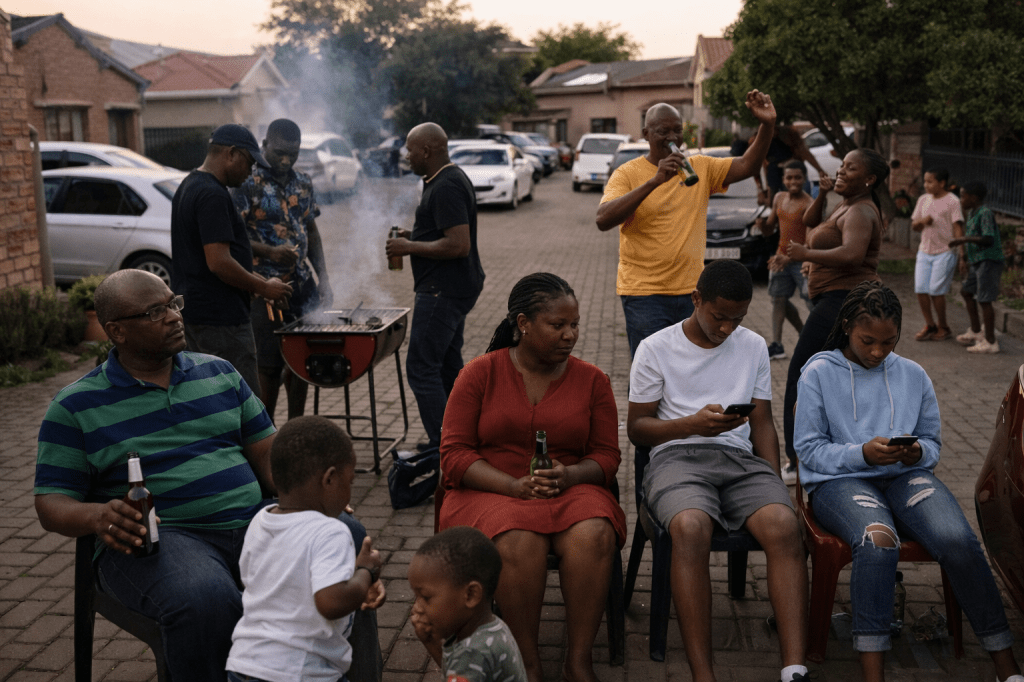
Over the Christmas period, I watched families come together in ways that felt familiar and expected. Homes filled up. Photos were taken. Conversations followed well rehearsed paths, work, children, progress, plans. From the outside, it looked like togetherness as we have come to know it.

Yet I could not escape the feeling that these gatherings no longer carry the same meaning they once did.

This is not a rejection of family, nor a dismissal of what these moments can offer. Family time can still be grounding and necessary. But I found myself questioning whether presence has begun to replace connection, and whether obligation is quietly being mistaken for closeness.

I wondered when going home became something we see as a duty rather than a choice.

Family as Ritual Rather Than Relationship

Christmas has become one of the most powerful family rituals we have. It is a fixed point in the calendar where attendance is assumed and absence is interrogated. Being there is often treated as proof of care, regardless of how that presence feels or what it costs.

Rituals are not inherently bad. They provide continuity and structure. But when rituals survive longer than their meaning, they risk becoming hollow performances.

In many families, Christmas gatherings now feel less like shared rest and more like scheduled compliance. You arrive because it is expected. You stay because leaving early raises questions. You participate because not participating carries consequences. The result is a room full of people who are physically present but emotionally guarded.

Togetherness, in this context, becomes procedural rather than relational.

The Quiet Pressure to Perform

One of the most striking features of modern family gatherings is how easily they turn into stages.

Success is displayed through cars parked outside, clothes worn inside, and stories told around the table. Conversations gravitate towards promotions, businesses, degrees, children’s achievements, and future plans. These topics are not harmful on their own. The problem lies in what they crowd out.

In unequal societies, achievement is not a neutral topic. It draws invisible lines between those who are progressing and those who are merely surviving. For some family members, these conversations affirm belonging. For others, they amplify silence.

When success becomes the safest currency of interaction, vulnerability disappears. Struggle becomes unspeakable. And the very space meant to offer refuge begins to reinforce hierarchy.

People leave feeling measured rather than held.

Obligation Versus Choice

There is a fundamental difference between being somewhere because you want to be there and being somewhere because you are supposed to be there.

Chosen presence allows honesty. Obligated presence requires performance.

Many people attend family gatherings while managing quiet resentment, emotional exhaustion, or unresolved conflict. They suppress parts of themselves to preserve harmony. They carry the emotional labour of keeping things pleasant. Over time, this creates distance rather than closeness.

In a world defined by rapid change, flexibility, and constant adaptation, this kind of emotional rigidity becomes unsustainable. Careers shift. Locations change. Identities evolve. Yet family expectations often remain frozen in an earlier version of who we were meant to be.

This mismatch creates tension, especially for those trying to survive and adapt in uncertain conditions.

When Family Becomes Restrictive

Family becomes restrictive not because it demands care, but because it sometimes demands conformity.

Unspoken rules govern how one should behave, what success should look like, how often one should show up, and what sacrifices are considered acceptable. Deviation is interpreted as distance. Distance is interpreted as betrayal.

Under these conditions, family stops functioning as a support system and starts operating as a control system.

This is rarely intentional. It emerges from fear, tradition, and inherited expectations. But the impact is real. Some people find that in order to grow, they need distance. Not because they lack love, but because proximity comes at the cost of selfhood.

That truth is difficult to admit in cultures that moralise family loyalty without examining its effects.

Holding the Positive and the Problematic

It is important to say this clearly. Family gatherings are not meaningless by default.

For many people, Christmas remains a rare moment of safety, laughter, and grounding. For some, it is the only time they feel seen. For others, it is a reminder that they are not alone.

These experiences are real and valid.

But so are the experiences of those who feel drained, diminished, or isolated by the same rituals. The problem arises when we assume a single meaning for family time and silence those whose experiences do not align with the ideal.

Togetherness does not guarantee connection. Tradition does not guarantee care.

Rethinking What Family Could Be

Perhaps the question is not whether family still matters, but how we allow it to matter.

What if family was less about annual obligation and more about honest presence. Less about display and more about listening. Less about measuring progress and more about acknowledging reality.

What if choosing distance at times was not seen as rejection, but as self preservation. What if showing up differently, or less frequently, did not automatically signal failure or disrespect.

These are uncomfortable questions. But discomfort often signals that a concept is being stretched beyond its original design.

Closing Reflection

I do not have final answers. What I have is a growing sense that the concept of family, like many social structures, is under strain. The world has changed faster than our expectations of one another.

Perhaps what we are witnessing is not the breakdown of family, but the fading of an old meaning that no longer fits the lives we are living. And perhaps the task ahead is not to abandon family, but to renegotiate it with honesty, humility, and care.

Not every gathering needs to be a performance. Not every absence needs to be explained. And not every family needs to look the same to still matter.

South Africa’s Cybersecurity Failure Is Not About Policy Gaps. It Is About State Capability.

Given SHINGANGE

1. Introduction: South Africa’s Cybersecurity Problem Is Not a Knowledge Problem

South Africa does not suffer from a lack of cybersecurity knowledge, frameworks, or international guidance. It suffers from a persistent failure of execution, authority, and accountability. For more than a decade, the country has produced policies, frameworks, and institutional arrangements that acknowledge cybersecurity as a national priority. Yet cyber incidents continue to rise, critical services remain exposed, and state capacity to respond coherently remains weak.

This is not a technical problem. It is a governance problem.

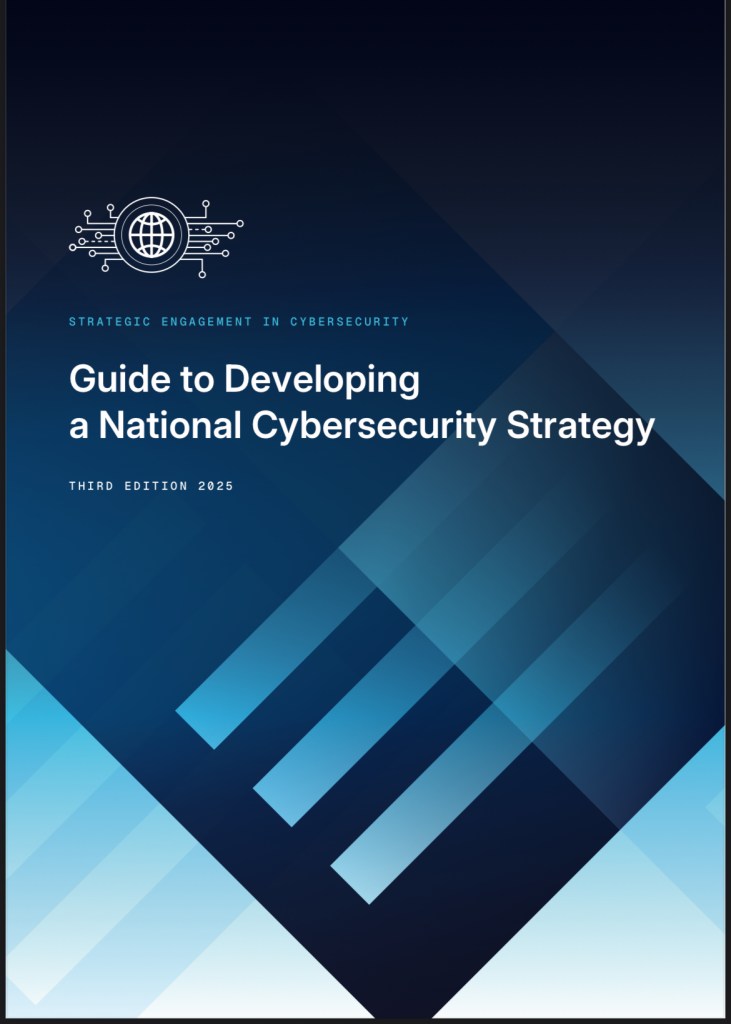
The latest Guide to Developing a National Cybersecurity Strategy, 3rd Edition (2025) makes this distinction explicit. The Guide is no longer focused on helping states understand what cybersecurity is. It is focused on helping states translate intent into durable capability. In this respect, South Africa stands as a clear example of a country that has absorbed the language of cybersecurity without internalising its discipline.

More concerning is that South Africa’s cybersecurity posture remains poorly aligned with the reality of modern hybrid threats, where cyber operations, disinformation, influence campaigns, economic coercion, and institutional weakness intersect. The country continues to treat cybersecurity as a narrow ICT or compliance issue, while adversaries treat it as a tool of power, leverage, and strategic influence.

This article argues that South Africa’s cybersecurity weakness is not caused by the absence of strategy. It is caused by the inability or unwillingness of the state to convert strategy into authority, funding, skills, and enforcement.

2. What the Guide Actually Says, Not What We Prefer to Hear

The 2025 Guide is explicit in its intent. It positions national cybersecurity strategy as a living governance instrument, not a policy document to be published and forgotten. It introduces a lifecycle approach that forces states to confront uncomfortable realities, such as sustainable funding, institutional leadership, implementation sequencing, and performance measurement.

At its core, the Guide emphasises three non-negotiables:

First, clear leadership and mandate. A national cybersecurity strategy cannot succeed without a single, empowered authority that coordinates across government and society.

Second, implementation and sustainment. Strategies without funded action plans, timelines, and accountability mechanisms are meaningless.

Third, adaptability to evolving threats, including emerging technologies and hybrid threat models that blur the line between civilian, economic, and national security domains.

The 3rd Edition strengthens these points by focusing heavily on financing, monitoring, evaluation, and technological foresight. This shift is significant. It reflects a global recognition that many states no longer fail at the level of ideas, but at the level of execution.

South Africa’s problem is that it continues to behave as if drafting a strategy is the same as building capability.

3. Using the Guide as a Benchmark: Where South Africa Falls Short

When the Guide’s overarching principles are applied to South Africa, the gaps are immediate and systemic.

Clear leadership and authority

South Africa does not have a single, clearly empowered national cybersecurity authority with the political weight and operational mandate required to coordinate across government, regulators, state-owned entities, and the private sector. Responsibilities are dispersed across departments, agencies, and committees, many of which lack enforcement power.

This fragmentation violates one of the most basic principles of the Guide: cybersecurity governance requires clarity of leadership, not collaborative ambiguity.

Whole-of-government coordination

The Guide assumes that cybersecurity cuts across sectors and functions. In South Africa, coordination often exists in theory but collapses in practice. Interdepartmental processes are slow, politicised, and frequently undermined by competing mandates and budgetary silos.

Cybersecurity is discussed, but rarely prioritised when trade-offs must be made.

Risk-based prioritisation

South Africa continues to struggle with national-level cyber risk management. There is limited evidence of a continuously updated national cyber risk register that informs policy decisions, investment, or crisis preparedness. Risk assessments, where they exist, are often static and compliance-driven.

Sustainable funding and capacity

The Guide is unambiguous. Cybersecurity requires predictable, multi-year funding and sustained investment in people. South Africa’s approach remains ad hoc. Cybersecurity initiatives are launched without long-term funding commitments, resulting in fragile systems that degrade over time.

This is not a budgeting issue alone. It reflects a failure to treat cybersecurity as a strategic investment rather than a discretionary expense.

4. Lifecycle Failure in the South African Context

The Guide’s lifecycle model provides a useful diagnostic tool to understand where South Africa consistently fails.

Initiation without authority

Strategies are initiated without clearly designating a lead authority with the power to compel cooperation. Committees are created, but authority is diluted.

Stocktaking without consequence

Assessments are conducted, reports are written, and gaps are identified. Yet these findings rarely result in decisive action or structural reform.

Strategies without funding

Cybersecurity strategies are published without binding financial commitments. Action plans, if they exist, are aspirational rather than operational.

Action plans without enforcement

Implementing entities are named, but consequences for non-delivery are absent. Performance management is weak or non-existent.

Monitoring without accountability

Monitoring and evaluation processes are often procedural, producing reports that are noted rather than acted upon.

In short, South Africa moves through the motions of the lifecycle without internalising its discipline.

5. Focus Areas Applied to South Africa’s Reality

Governance

Governance remains fragmented. No central authority has the mandate or legitimacy to enforce national cybersecurity priorities across sectors. This leads to duplication, gaps, and institutional paralysis.

Critical infrastructure and essential services

Despite repeated warnings, the protection of critical infrastructure remains uneven. Cybersecurity requirements are inconsistently applied, oversight is weak, and interdependencies between sectors are poorly understood.

National cyber risk management

There is no mature, dynamic national cyber risk management framework that informs strategic decision-making. Risk insights are not systematically linked to investment or crisis planning.

Incident response and CSIRT maturity

South Africa’s incident response capability is uneven and insufficiently integrated across sectors. Information sharing remains limited, and large-scale national exercises are rare.

Skills, capacity, and awareness

The skills deficit is acute, not only at technical levels but at senior decision-making levels. Many leaders responsible for cybersecurity policy lack the expertise to understand the consequences of inaction or poor design.

Legislation and regulation

While laws exist, enforcement is inconsistent. Regulatory overlap creates confusion, while gaps remain in areas related to cyber-enabled hybrid threats.

International cooperation

South Africa participates in international forums, but domestic capacity limits its ability to translate cooperation into tangible resilience.

6. Hybrid Threats and the Blind Spot in South Africa’s Cyber Policy

One of the most serious shortcomings of South Africa’s cybersecurity posture is its failure to fully integrate hybrid threats into national cyber policy.

Cybersecurity is still treated as an ICT issue, separate from disinformation, influence operations, economic coercion, and cognitive manipulation. This separation is artificial and dangerous.

Hybrid threats exploit institutional weakness, social divisions, and governance gaps. They target trust, decision-making, and legitimacy. South Africa’s fragmented cybersecurity governance makes it particularly vulnerable to such operations.

The Guide implicitly recognises this reality through its emphasis on cross-sector coordination and technological foresight. South Africa has yet to operationalise this insight.

7. Strategic Risks of Continued Inaction

The risks of continued failure are not abstract.

Critical services remain exposed to disruption. Public trust in digital systems erodes. The state becomes increasingly vulnerable to foreign influence operations that exploit weak cyber governance. Crisis response capabilities remain inadequate during national emergencies or high-profile events.

Most importantly, cybersecurity failure undermines state credibility and sovereignty.

8. What South Africa Should Be Doing Now

South Africa does not need another strategy. It needs discipline.

First, designate a single national cybersecurity authority with clear legal and political authority.

Second, align funding with strategy through multi-year commitments embedded in national budgeting processes.

Third, establish enforceable accountability mechanisms for implementation.

Fourth, integrate cybersecurity fully into national security and hybrid threat frameworks.

Finally, invest in decision-maker capability, not only technical skills.

9. Conclusion: From Strategy Documents to State Capability

Cybersecurity is a test of governance. South Africa has repeatedly failed that test, not because it lacks guidance, but because it lacks the will and structure to act.

The 2025 Guide does not offer comfort. It offers a mirror. What South Africa sees in that mirror should be deeply unsettling.

The question is no longer whether the country understands cybersecurity. The question is whether it is prepared to govern it.

When Men Lose Their Place, Society Pays the Price

Given SHINGANGE

I arrived unannounced, as I often do. I took the street that passes the local shops ko Ramadan as we call them, partly out of habit, partly out of instinct. Some part of me suspected I might find him there. My father is one of those people who collect the different purses of those playing mochina. And there he was.

The street was alive with movement. Men and women standing and sitting in clusters, some by their usual spot there by the guy who fixes shoes. Conversations layered on top of each other. Waiting. Hoping. Calculating. Mochina is more than gambling. It is a ritual. Numbers are not random. They are stories. They represent events, dreams, memories, and losses. You read the morning, interpret life, and choose a number. You put money down not just on chance, but on meaning.

There was a time when mochina was played by old people in the community, and now, when I go there, I see that there are a lot of young people, I hasten to say young people, though, because maybe when I was young, the old people I am referring to were my age. Anyway, this spot in my community is busy, with a bottle store at the corner, a foreign-owned shop, which is why it is called Ramadan, and a spot where alcohol purchased from the liquor shop can be consumed. There is also Laphalapha, where they sell sphatlhos/kotas. Next to Laphalapha, there is a barber shop in one of the houses.

I parked. He walked over to my car. I asked for numbers while lodging a complaint that whenever I ask him for them, I never win. He starts telling me that it occurred to him that I might come home that day. As he tells me this, Bra Lucky passes by, and I ask him for a number. I think he mentioned 13. I don’t even know what it means, but I keep searching for loose change in the car, half embarrassed, half hopeful. I played along, knowing full well how this usually ends. “o mmone, Kenny?” my Dad asks if I have seen Kenny. Ntate Kenny is his best friend, and he points to the corner where the guy who fixes shoes is. I think my dad is old now because I haven’t driven past that spot yet. Anyway, I drive off and make sure to shout a greeting when I pass that spot.

He comes home, I ask if I had won, that time I don’t even remember my numbers, and he tells me that most people didn’t win and continues to explain how the mochina has played all of them, and that no one from his bag won. Even if his numbers don’t come up, but someone else does, there is a percentage that he gets, so you can imagine how it feels when even the other people do not win.

Later that day, after the formal greetings in the sitting room, I ask how he is, and he says he is ok. He had not been well, and I was travelling, so when I ask, I normally have a visual inspection of sorts to see if he is ok.

He then told me about an event they are going to that relates to the men’s forum. He has spoken about the forum before, and he normally tells me stories from there. Old men mostly. Pensioners. Men with time, memory, and regret. They sit together and talk about their lives. And often, they cry. This man’s forum is run by the local clinic.

It seems like this is something that they really look forward to as local men, not because they are weak. But because they finally have permission.

The stories are painfully similar. Men who were pushed out of their own homes. Men whose authority was steadily eroded until it disappeared. Men who watched their children grow up listening only to their mothers, not because the mothers were wrong, but because the fathers were sidelined, disempowered, or made irrelevant. Men who now look at their grown children and see struggle, confusion, anger, and failure. And they blame themselves. Mind you, these are men who, for the longest time they had to endure apartheid, being disrespected by young white men and women, calling them boy and all sorts of names.

This is where the conversation around men in our society becomes dishonest.

We talk endlessly about toxic masculinity. We talk very little about displaced masculinity. We speak loudly about men as problems, but quietly about men as casualties. In South Africa, especially, the dominant narrative paints men as irresponsible, violent, absent, or dangerous. Some men fit that description. Many do not. Yet all are judged by the same brush.

What happens when a man is told repeatedly that his role is unnecessary, suspect, or harmful?

He retreats.

He withdraws from decision-making. From discipline. From emotional investment. From responsibility. Sometimes he withdraws into alcohol. Sometimes into gambling. Sometimes into silence. Sometimes into forums where other broken men nod in recognition.

And then society acts surprised when children grow up without structure, without direction, without accountability. We talk about absent fathers without asking who pushed them out, who undermined them, or who taught them that their presence no longer mattered.

The men in these forums are not monsters. They are men who failed in environments that no longer knew what to do with them. Men who were never taught how to adapt their masculinity to changing social realities were only told that it was wrong. Men who were stripped of authority without being given a new role. Men who now carry the guilt of outcomes they had limited power to influence.

The pain cuts deeper when they speak about their children. Sons who drift. Daughters who struggle. Lives that never quite stabilise. The men internalise it as personal failure. The forum, meant to heal, often becomes a mirror reflecting everything they lost.

This is the uncomfortable truth. You cannot dismantle men’s role in society without consequences. You cannot weaken fathers and expect strong families. You cannot confuse masculinity and then blame men for being lost.

Being a man is not about domination. It is about responsibility. It is about presence. It is about guidance, protection, and sacrifice. When society attacks those foundations without offering alternatives, men do not become better. They become invisible.

And invisible men do not raise strong children.

If we are serious about fixing our social decay, crime, unemployment, and moral drift, we must stop having shallow conversations about men. We must stop reducing complex historical, economic, and cultural realities into slogans. We must create spaces where men are rebuilt, not shamed. Where fatherhood is reinforced, not questioned. Where masculinity is redefined with clarity, not contempt.

Those old men sitting in forums crying are not the end of the story. They are a warning.

Ignore them, and the next generation will sit in the same circles, with even less hope, even less structure, and even more resentment.

This is not about men versus women. It is about balance. About roles. About accountability. About restoring order in a society that has confused liberation with destruction.

When men lose their place, society does not become freer. It becomes weaker.

And we are already paying the price.

Hoba Monna (being a man) and the Quiet Weight Men Carry

Given SHINGANGE

Hoba Monna by Sannere featuring Selimo Thabang, Omali Themba, Flash Cortez, Wave Rhyder, Marcx Brass) 

I hesitated before writing and publishing this piece during the 16 Days of Activism for No Violence Against Women and Children, a period rightly dedicated to confronting gender based violence and the harm it causes. I am conscious that speaking about men’s struggles at this time can easily be misread as deflection, minimisation, or even quiet support for violence, as if acknowledging the weight men carry somehow denies the suffering of women. That fear of misinterpretation is real, and it says something important about the moment we are in. Yet silence is not neutrality. Avoiding honest reflection because it may be misunderstood only narrows the conversation further. This article is not an attempt to excuse harm or shift blame. It is an attempt to understand the human conditions under which many men are living, because without that understanding, the very violence we seek to end will continue to reproduce itself in quieter, less visible ways.

Sometimes a song does what public debates, campaigns, and opinion pieces struggle to do. It names a feeling without dressing it up. Hoba Monna does exactly that. It speaks plainly about what it feels like to be a man carrying responsibility in silence, and in doing so, it exposes a reality many men live but rarely articulate.

The title itself is revealing. Hoba monna means “to be a man”. Not to perform masculinity. Not to dominate. Simply to exist as a man. Yet from the opening hook, the song makes it clear that this existence has become exhausting.

“Ke fihletse boemong ba ho tsofala hoba monna, ke fihletse boemong ba ho utloa hore ho thata hoba monna.”

This is not exaggeration. It is accumulation. The repetition signals long term emotional fatigue, the slow wearing down that comes from expectation layered on top of expectation. Being a man, in this telling, is not dramatic. It is heavy.

Strength Without Space to Falter

In the first verse, the artist captures a contradiction many men experience early in life.

“People keep judging me, when I go weak, they forget I’m human and I also breathe.”

Men are permitted strength, but not struggle. The moment vulnerability appears, humanity is withdrawn. Weakness is treated as failure rather than as a normal part of being human.

Yet responsibility remains non negotiable.

“I gotta confide, I gotta provide in the process so my family can eat.”

There is no rejection of duty here. The pain comes from being expected to provide and endure without acknowledgement of cost. Men are required to function regardless of their internal state. When they do not, judgment follows swiftly. Pressure becomes personal rather than contextual. The man is blamed, while the conditions surrounding him remain invisible.

Becoming a Man Without Guidance

One of the quietest lines in the song is also one of the most revealing.

“And I wish my father could’ve shown me a hint.”

This is not accusation. It is absence speaking. It reflects the experience of many men who are expected to know how to be responsible, disciplined, and emotionally regulated without ever having seen those qualities modelled consistently.

Manhood is treated as instinctive rather than learned. When men struggle, the struggle is moralised instead of understood. Many men are navigating adulthood without maps, mentors, or reference points, while still being held to rigid standards.

Culture and the Discipline of Silence

The second verse, delivered in Sesotho, speaks directly to cultural training.

“Society e re rutile ho nka ka sefuba, ene re nke ka senna.”

Society taught us to take everything on the chest and take it as a man

This is not mockery of culture. It is description. Emotional restraint has long been framed as strength. Endurance as virtue. But the song does not romanticise this conditioning. It shows where it leads.

“Ho fihlela moo e ka reng kea khathala.”

Until the point where one becomes exhausted.

When pain has no outlet, it does not disappear. It accumulates. Silence does not build resilience indefinitely. It eventually produces numbness, withdrawal, or collapse.

Responsibility Without Support

One of the most important moments in Hoba Monna comes through a question that reveals imbalance.

“Ba re o hlokomele bana ba heno, empa nna ke hlokomelewa ke mang?”

They tell me to take care of my siblings, but who takes care of me?

This reflects a familiar reality in many African households. Men are expected to support siblings and extended family, to be stable, to be reliable, to carry others.

The follow up question sharpens the point.

“Ba re o ba loanele bana ba heno, empa nna ke loanela ke mang?”

They tell me to fight for my siblings, but who fights for me?

This is not self pity. It is recognition of imbalance. Responsibility flows outward. Care rarely flows back.

Smiling While Breaking

The final verse captures a reality many men live daily.

“Ke tlameha ke tsoe ke phande ke smile le batho kantle, ke robegile ka hare.”

I have to go outside hustle and smile with people, while I am broken inside.

This is not performance for praise. It is survival. In a society that responds harshly to male vulnerability, composure becomes armour. Smiling becomes a way to remain functional even while internally unraveling.

Why Hoba Monna Matters

Hoba Monna matters because it humanises men without excusing harm. It does not deny violence, irresponsibility, or failure. It asks a deeper question. What conditions produce men who are emotionally exhausted, silent, and disengaged?

Men carry pressures that are rarely named, let alone addressed. Economic strain. Cultural silence. Extended responsibility. Emotional isolation. None of these excuse destructive behaviour. Ignoring them guarantees its repetition.

Strength should not require emotional erasure. Responsibility should not require loneliness. Being a man should not mean carrying unbearable weight alone.

Hoba Monna is not asking for sympathy. It is asking for recognition. Recognition that men are human, that endurance has limits, and that silence is not the same as strength.

Sometimes music tells the truth long before society is ready to hear it.

What Does It Mean to Be a Modern Man in South Africa?

There is a quiet crisis unfolding in South African society, and it is not being spoken about honestly. It sits beneath the headlines, beneath the slogans, beneath the well funded campaigns and carefully worded statements. It is the crisis of what it means to be a man, and whether society still knows how to speak to men without turning them into symbols of everything that is wrong.

To be clear from the outset, this is not an attempt to deny the reality of violence, abuse, or harm committed by men. Those realities are undeniable and must be confronted directly. But confronting harm is not the same thing as condemning an entire group into silence, shame, and disengagement. Somewhere along the way, South Africa has begun to confuse accountability with collective guilt. That confusion is costing us more than we are willing to admit.

A generation of men is growing up hearing what they must not be. Do not be dominant. Do not be assertive. Do not be too strong. Do not lead in the wrong way. Do not speak incorrectly. Do not exist incorrectly. Yet there is far less clarity about what men should be. And when a society only knows how to criticise, but not how to guide, it should not be surprised when the result is confusion rather than change.

Historically, manhood in South Africa was not a vague or abstract idea. Across cultures and communities, despite their differences, there were shared expectations. A man was expected to take responsibility. He was expected to protect, to provide where possible, to discipline himself before disciplining others, and to anchor a family and a community. These roles were not always fulfilled perfectly, and they were often distorted by patriarchy, violence, and power. But they provided a moral structure. They gave men something to grow into.

That structure has largely collapsed, not because it was consciously dismantled with care, but because it was attacked without being replaced. Economic exclusion has made the provider role unreachable for millions. Unemployment has stripped men of dignity long before any social campaign ever did. Fatherlessness has removed mentorship at scale. Historical trauma has gone unprocessed. Into this vacuum, society has inserted a single dominant message, men are the problem.

Public discourse increasingly frames men primarily through statistics of violence, abuse, and crime. Media narratives repeat these images until they become identity. Campaigns, often well intentioned, speak about men as risks to be managed rather than people to be developed. Masculinity itself is treated as something that must be softened, neutralised, or apologised for, rather than disciplined and directed.

The idea of toxic masculinity is a good example. At its best, it was meant to describe specific harmful behaviours. At its worst, it has become a blunt instrument, used to suggest that masculinity itself is suspect. The problem is not that men are strong, assertive, or capable of leadership. The problem is what they do with those traits, and whether they are guided by moral responsibility. But this distinction is often lost. When masculinity is framed primarily as a danger, many men stop engaging altogether.

The psychological cost of this matters. When men are constantly told that their instincts are wrong, their presence is threatening, and their history is shameful, many respond not with reform, but with withdrawal. Silence replaces participation. Apathy replaces leadership. Some retreat into resentment. Others simply opt out of society altogether. None of these outcomes serve women, children, or communities.

There is also a deep contradiction at play. Society still expects men to show up in moments of crisis. To protect. To intervene. To take responsibility when things go wrong. Yet at the same time, it strips them of confidence, moral authority, and legitimacy. You cannot ask men to lead while constantly telling them they are unfit to do so. You cannot expect responsibility from people who are treated as permanent suspects.

This contradiction is especially stark in the South African context. Men are expected to navigate extreme inequality, unemployment, and social instability, while being held to moral standards that assume access to resources, opportunity, and support. A young man in a township is told to be responsible, but denied work. Told to be present, but raised without a father. Told to respect women, but shown daily through lived experience that power is exercised without fairness or justice. This does not excuse harmful behaviour, but it does explain why simplistic narratives fail.

What is missing from the conversation is a serious discussion about male development. Not punishment. Not slogans. Development. Men are not born knowing how to be disciplined, restrained, or ethical. These are learned behaviours, shaped through mentorship, expectation, and consequence. When society abandons this work, and replaces it with condemnation, it forfeits the very change it claims to want.

Accountability is essential. But accountability without dignity is ineffective. Men respond to standards when those standards are clear, consistent, and rooted in respect. Historically, rites of passage, work, fatherhood, and community roles provided these standards. Today, many men drift without markers, without recognition, without a sense of earned identity. In that vacuum, some seek belonging in destructive ways.

It is also worth asking who benefits from a society where men are disengaged. A passive man does not build. A confused man does not lead. A resentful man does not cooperate. The weakening of men does not strengthen women. It weakens families. Children do not benefit from absent fathers, whether that absence is physical or emotional. Communities do not thrive when half their population is treated as a problem to be managed rather than a resource to be cultivated.

This is not a call to return to outdated or abusive models of masculinity. Dominance, entitlement, and violence have no place in a healthy society. But neither does moral erasure. A constructive model of modern manhood must be rooted in responsibility, self mastery, service, and courage. Not the courage of aggression, but the courage of restraint. Not dominance over others, but mastery over oneself.

A modern South African man should be held to high standards. He should be expected to protect without controlling, to lead without abusing, to provide where possible and to contribute where he cannot. He should be challenged to confront his own behaviour honestly. But he should also be spoken to as someone capable of growth, not as an inherent threat.

The current narrative often fails this test. It speaks about men, not to them. It diagnoses without mentoring. It condemns without constructing. In doing so, it undermines its own goals. Social change does not happen through humiliation. It happens through clarity, expectation, and inclusion.

If South Africa is serious about addressing violence, inequality, and social breakdown, it must re learn how to speak to men with both firmness and respect. Men must be included as part of the solution, not positioned permanently as the source of the problem. This requires courage, because it means resisting easy narratives and simplistic villains.

A society that wants better men must be willing to invest in making them. That means mentorship. That means work opportunities. That means fathers who are supported, not mocked. That means cultural conversations that distinguish between harmful behaviour and male identity. That means acknowledging historical and economic realities without using them as excuses or weapons.

Being a modern man in South Africa should mean choosing responsibility in a context that often denies recognition. It should mean discipline in a culture that rewards excess. It should mean standing up, not because you are told you are dangerous, but because you are reminded that you matter.

Until we can have that conversation honestly, we will continue to talk past each other. And in that silence, the quiet crisis of men will deepen, with consequences that society will eventually be forced to confront.