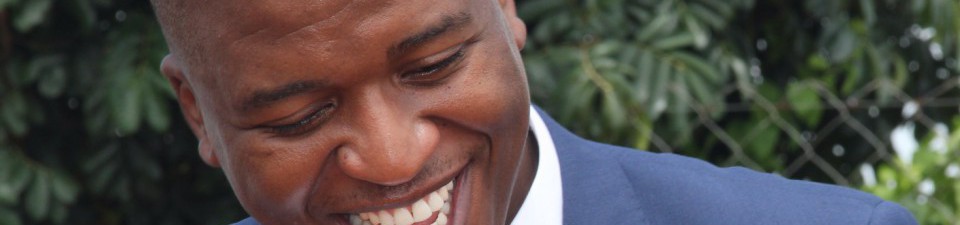

Hoba Monna by Sannere featuring Selimo Thabang, Omali Themba, Flash Cortez, Wave Rhyder, Marcx Brass)
I hesitated before writing and publishing this piece during the 16 Days of Activism for No Violence Against Women and Children, a period rightly dedicated to confronting gender based violence and the harm it causes. I am conscious that speaking about men’s struggles at this time can easily be misread as deflection, minimisation, or even quiet support for violence, as if acknowledging the weight men carry somehow denies the suffering of women. That fear of misinterpretation is real, and it says something important about the moment we are in. Yet silence is not neutrality. Avoiding honest reflection because it may be misunderstood only narrows the conversation further. This article is not an attempt to excuse harm or shift blame. It is an attempt to understand the human conditions under which many men are living, because without that understanding, the very violence we seek to end will continue to reproduce itself in quieter, less visible ways.
Sometimes a song does what public debates, campaigns, and opinion pieces struggle to do. It names a feeling without dressing it up. Hoba Monna does exactly that. It speaks plainly about what it feels like to be a man carrying responsibility in silence, and in doing so, it exposes a reality many men live but rarely articulate.
The title itself is revealing. Hoba monna means “to be a man”. Not to perform masculinity. Not to dominate. Simply to exist as a man. Yet from the opening hook, the song makes it clear that this existence has become exhausting.
“Ke fihletse boemong ba ho tsofala hoba monna, ke fihletse boemong ba ho utloa hore ho thata hoba monna.”
This is not exaggeration. It is accumulation. The repetition signals long term emotional fatigue, the slow wearing down that comes from expectation layered on top of expectation. Being a man, in this telling, is not dramatic. It is heavy.
Strength Without Space to Falter
In the first verse, the artist captures a contradiction many men experience early in life.
“People keep judging me, when I go weak, they forget I’m human and I also breathe.”
Men are permitted strength, but not struggle. The moment vulnerability appears, humanity is withdrawn. Weakness is treated as failure rather than as a normal part of being human.
Yet responsibility remains non negotiable.
“I gotta confide, I gotta provide in the process so my family can eat.”
There is no rejection of duty here. The pain comes from being expected to provide and endure without acknowledgement of cost. Men are required to function regardless of their internal state. When they do not, judgment follows swiftly. Pressure becomes personal rather than contextual. The man is blamed, while the conditions surrounding him remain invisible.
Becoming a Man Without Guidance
One of the quietest lines in the song is also one of the most revealing.
“And I wish my father could’ve shown me a hint.”
This is not accusation. It is absence speaking. It reflects the experience of many men who are expected to know how to be responsible, disciplined, and emotionally regulated without ever having seen those qualities modelled consistently.
Manhood is treated as instinctive rather than learned. When men struggle, the struggle is moralised instead of understood. Many men are navigating adulthood without maps, mentors, or reference points, while still being held to rigid standards.
Culture and the Discipline of Silence
The second verse, delivered in Sesotho, speaks directly to cultural training.
“Society e re rutile ho nka ka sefuba, ene re nke ka senna.”
Society taught us to take everything on the chest and take it as a man
This is not mockery of culture. It is description. Emotional restraint has long been framed as strength. Endurance as virtue. But the song does not romanticise this conditioning. It shows where it leads.
“Ho fihlela moo e ka reng kea khathala.”
Until the point where one becomes exhausted.
When pain has no outlet, it does not disappear. It accumulates. Silence does not build resilience indefinitely. It eventually produces numbness, withdrawal, or collapse.
Responsibility Without Support
One of the most important moments in Hoba Monna comes through a question that reveals imbalance.
“Ba re o hlokomele bana ba heno, empa nna ke hlokomelewa ke mang?”
They tell me to take care of my siblings, but who takes care of me?
This reflects a familiar reality in many African households. Men are expected to support siblings and extended family, to be stable, to be reliable, to carry others.
The follow up question sharpens the point.
“Ba re o ba loanele bana ba heno, empa nna ke loanela ke mang?”
They tell me to fight for my siblings, but who fights for me?
This is not self pity. It is recognition of imbalance. Responsibility flows outward. Care rarely flows back.
Smiling While Breaking
The final verse captures a reality many men live daily.
“Ke tlameha ke tsoe ke phande ke smile le batho kantle, ke robegile ka hare.”
I have to go outside hustle and smile with people, while I am broken inside.
This is not performance for praise. It is survival. In a society that responds harshly to male vulnerability, composure becomes armour. Smiling becomes a way to remain functional even while internally unraveling.
Why Hoba Monna Matters
Hoba Monna matters because it humanises men without excusing harm. It does not deny violence, irresponsibility, or failure. It asks a deeper question. What conditions produce men who are emotionally exhausted, silent, and disengaged?
Men carry pressures that are rarely named, let alone addressed. Economic strain. Cultural silence. Extended responsibility. Emotional isolation. None of these excuse destructive behaviour. Ignoring them guarantees its repetition.
Strength should not require emotional erasure. Responsibility should not require loneliness. Being a man should not mean carrying unbearable weight alone.
Hoba Monna is not asking for sympathy. It is asking for recognition. Recognition that men are human, that endurance has limits, and that silence is not the same as strength.
Sometimes music tells the truth long before society is ready to hear it.

 Given SHINGANGE