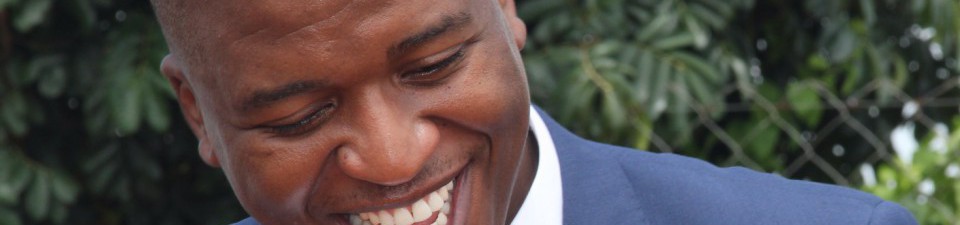

Given SHINGANGE
I arrived unannounced, as I often do. I took the street that passes the local shops ko Ramadan as we call them, partly out of habit, partly out of instinct. Some part of me suspected I might find him there. My father is one of those people who collect the different purses of those playing mochina. And there he was.
The street was alive with movement. Men and women standing and sitting in clusters, some by their usual spot there by the guy who fixes shoes. Conversations layered on top of each other. Waiting. Hoping. Calculating. Mochina is more than gambling. It is a ritual. Numbers are not random. They are stories. They represent events, dreams, memories, and losses. You read the morning, interpret life, and choose a number. You put money down not just on chance, but on meaning.
There was a time when mochina was played by old people in the community, and now, when I go there, I see that there are a lot of young people, I hasten to say young people, though, because maybe when I was young, the old people I am referring to were my age. Anyway, this spot in my community is busy, with a bottle store at the corner, a foreign-owned shop, which is why it is called Ramadan, and a spot where alcohol purchased from the liquor shop can be consumed. There is also Laphalapha, where they sell sphatlhos/kotas. Next to Laphalapha, there is a barber shop in one of the houses.
I parked. He walked over to my car. I asked for numbers while lodging a complaint that whenever I ask him for them, I never win. He starts telling me that it occurred to him that I might come home that day. As he tells me this, Bra Lucky passes by, and I ask him for a number. I think he mentioned 13. I don’t even know what it means, but I keep searching for loose change in the car, half embarrassed, half hopeful. I played along, knowing full well how this usually ends. “o mmone, Kenny?” my Dad asks if I have seen Kenny. Ntate Kenny is his best friend, and he points to the corner where the guy who fixes shoes is. I think my dad is old now because I haven’t driven past that spot yet. Anyway, I drive off and make sure to shout a greeting when I pass that spot.
He comes home, I ask if I had won, that time I don’t even remember my numbers, and he tells me that most people didn’t win and continues to explain how the mochina has played all of them, and that no one from his bag won. Even if his numbers don’t come up, but someone else does, there is a percentage that he gets, so you can imagine how it feels when even the other people do not win.
Later that day, after the formal greetings in the sitting room, I ask how he is, and he says he is ok. He had not been well, and I was travelling, so when I ask, I normally have a visual inspection of sorts to see if he is ok.
He then told me about an event they are going to that relates to the men’s forum. He has spoken about the forum before, and he normally tells me stories from there. Old men mostly. Pensioners. Men with time, memory, and regret. They sit together and talk about their lives. And often, they cry. This man’s forum is run by the local clinic.
It seems like this is something that they really look forward to as local men, not because they are weak. But because they finally have permission.
The stories are painfully similar. Men who were pushed out of their own homes. Men whose authority was steadily eroded until it disappeared. Men who watched their children grow up listening only to their mothers, not because the mothers were wrong, but because the fathers were sidelined, disempowered, or made irrelevant. Men who now look at their grown children and see struggle, confusion, anger, and failure. And they blame themselves. Mind you, these are men who, for the longest time they had to endure apartheid, being disrespected by young white men and women, calling them boy and all sorts of names.
This is where the conversation around men in our society becomes dishonest.
We talk endlessly about toxic masculinity. We talk very little about displaced masculinity. We speak loudly about men as problems, but quietly about men as casualties. In South Africa, especially, the dominant narrative paints men as irresponsible, violent, absent, or dangerous. Some men fit that description. Many do not. Yet all are judged by the same brush.
What happens when a man is told repeatedly that his role is unnecessary, suspect, or harmful?
He retreats.
He withdraws from decision-making. From discipline. From emotional investment. From responsibility. Sometimes he withdraws into alcohol. Sometimes into gambling. Sometimes into silence. Sometimes into forums where other broken men nod in recognition.
And then society acts surprised when children grow up without structure, without direction, without accountability. We talk about absent fathers without asking who pushed them out, who undermined them, or who taught them that their presence no longer mattered.
The men in these forums are not monsters. They are men who failed in environments that no longer knew what to do with them. Men who were never taught how to adapt their masculinity to changing social realities were only told that it was wrong. Men who were stripped of authority without being given a new role. Men who now carry the guilt of outcomes they had limited power to influence.
The pain cuts deeper when they speak about their children. Sons who drift. Daughters who struggle. Lives that never quite stabilise. The men internalise it as personal failure. The forum, meant to heal, often becomes a mirror reflecting everything they lost.
This is the uncomfortable truth. You cannot dismantle men’s role in society without consequences. You cannot weaken fathers and expect strong families. You cannot confuse masculinity and then blame men for being lost.
Being a man is not about domination. It is about responsibility. It is about presence. It is about guidance, protection, and sacrifice. When society attacks those foundations without offering alternatives, men do not become better. They become invisible.
And invisible men do not raise strong children.
If we are serious about fixing our social decay, crime, unemployment, and moral drift, we must stop having shallow conversations about men. We must stop reducing complex historical, economic, and cultural realities into slogans. We must create spaces where men are rebuilt, not shamed. Where fatherhood is reinforced, not questioned. Where masculinity is redefined with clarity, not contempt.
Those old men sitting in forums crying are not the end of the story. They are a warning.
Ignore them, and the next generation will sit in the same circles, with even less hope, even less structure, and even more resentment.
This is not about men versus women. It is about balance. About roles. About accountability. About restoring order in a society that has confused liberation with destruction.
When men lose their place, society does not become freer. It becomes weaker.
And we are already paying the price.

 Given SHINGANGE
Interesting perspective. I am curious as to who should be teaching men to adapt their masculinity to changing social realities? Are we not all navigating blindly and morphing as we see it fit? Is there anyone who knows better and can guide? Society is doing the best it can. As much as I get where this is coming from, we are all victims, we are all trying to survive societal changes. Noone has a compass that points to true North.
LikeLike