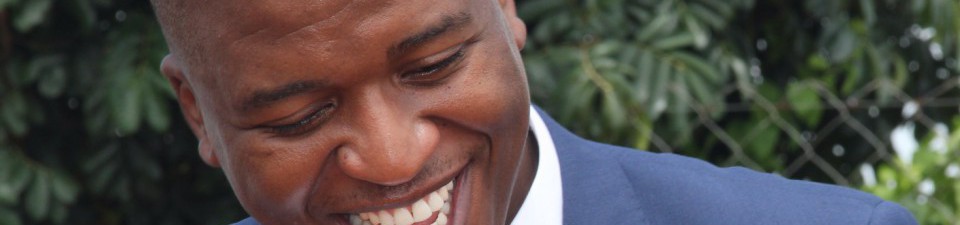
Given SHINGANGE
I could not vote on 27 April 1994. I was not yet 18. The same thing happened again in 1999 — election day came, and once more I was underage, even though I would later vote in that year’s local government elections. Like many South Africans of my generation, my political consciousness was formed long before I was legally allowed to participate. That distance between lived politics and formal participation has never really closed — and it matters more now than it did then.
When I finally did vote in 1999, I voted for the ANC. At the time, that choice required no justification. The movement still carried moral authority, historical legitimacy, and overwhelming public trust. But what is less often acknowledged is how quickly discomfort set in afterwards. From the national elections that followed, I never again voted for the ANC — not because another party persuaded me, and not because I had disengaged from the country’s future, but because something already felt misaligned. Even then, it seemed that the story and the reality were starting to drift apart.
Around 2010, while I was living in Bloemfontein, I shared my frustration with my mentor, AZ. His response was direct and necessary: it is easy to criticise from the sidelines; eventually you have to decide whether you are prepared to get involved. I took that seriously. I attended branch meetings. I tried to engage. What I encountered, however, was a political language and culture that felt disconnected from the problems I believed we should be confronting. I walked away, not in anger, but in quiet disappointment.
My political exposure did not come only through voting. In 2008, after resigning from the SANDF, I joined Sebra, a construction financing company owned by Kobus van Loggerenberg — KvL to those who knew him. He was a progressive white Afrikaner, a former SRC president at the University of the Free State in the 1980s, and someone shaped by difficult political choices during apartheid. He was also a principled man. May his soul continue to rest in peace.
At the time, the UFS was dealing with the Reitz 4 incident, where black workers were humiliated by white students in what became a national scandal. Sebra’s shareholders decided to support non-white student formations contesting the SRC elections, and my first real task at the company was to manage the campaign funds. What I witnessed during that period was instructive: fragmented organisations — SASCO, the YCL, and the ANC Youth League — had to be pushed to work together just to stand a chance.
They did not win the SRC presidency that year. But something important shifted. For the first time, these formations believed that institutional power was not permanently closed to them. That belief mattered. The following year, in 2009, that groundwork paid off. The same collective went on to win the SRC elections, and Moses Masitha became the first black SRC president at the University of the Free State.
That outcome reinforced a lesson that has stayed with me: politics is rarely about immediate victory. It is about coordination, persistence, and understanding the environment you are operating in — especially when institutions are stacked against you.
Around the same period, AZ invited me to be part of a delegation visiting the late Ethiopian Prime Minister Meles Zenawi. The group consisted of academics and professionals selected for what they were doing and what they might still contribute. The visit was not ideological. It was about exposure — about observing how other states thought about development, power, and sovereignty. I returned home with a broader lens and a deeper unease. South Africa, to me, appeared increasingly unprepared for the kind of world it was entering.
For years after that, I remained disengaged from ANC electoral politics.
Then came 2024 — and with it, a rupture that cannot be explained through traditional political analysis.
By then, the country had effectively lost control over its information environment. Social media was no longer just a platform for expression; it had become an operational domain. Disinformation, misinformation, coordinated influence campaigns, algorithmic amplification, and deliberate cognitive manipulation were no longer abstract concepts. They were observable, measurable, and increasingly sophisticated. What concerned me was not ordinary political contestation, but the erosion of South Africa’s information sovereignty.
This was not one party out-campaigning another. It was something more corrosive: sustained efforts, amplified through digital platforms and media ecosystems, aimed at eroding trust, inflaming division, and normalising instability. Many of these narratives did not originate organically within South African society. They were engineered to exploit our fractures.
I have explored these dynamics in depth in a recent series on this blog focused specifically on influence operations. That series looks at how these campaigns are designed, how they spread through digital systems, and why societies like ours are particularly vulnerable. This article is not a repetition of that work. It is a personal reflection shaped by it.
I voted for the ANC in 2024 not because it had suddenly become virtuous, competent, or deserving of renewed loyalty. I voted defensively. “Better the devil you know” is an uncomfortable phrase, but it captures the logic. Some of the forces shaping our political environment do not care about governance, service delivery, or justice. They care about disruption. A lawless, fragmented South Africa serves interests that are not our own.
The outcome — a Government of National Unity — should not reassure us. If anything, it should alarm us. What we witnessed was a probing exercise. The gaps were identified. The vulnerabilities mapped. And the campaigns for the next electoral cycle have already begun.
This is not a message to the ANC. It is a warning to all political parties and to society at large. Influence operations do not target parties; they target populations. They exploit grievances, identities, historical wounds, and economic pain. In a hyper-connected society like ours, no political formation is immune.
Our failure is that we are still thinking in outdated terms. We celebrate connectivity but ignore content. We talk about democracy while failing to grasp algorithmic warfare. We rely on old institutional structures to confront threats that are hybrid, asymmetric, and cognitive in nature. We are trying to solve twenty-first-century problems with twentieth-century tools.
The most dangerous failure, however, is not technical — it is intellectual. We are not honest enough to admit that we are out of our depth. Influence operations and cognitive warfare are specialised domains. They demand expertise, humility, and the willingness to listen to people who understand how these systems work.
That is all that is required of us right now: honesty about our limitations, and the courage to let those who know what they are doing help us think clearly. Anything less is not neutrality. It is negligence.

 Given SHINGANGE