When Family No Longer Means the Same Thing

Given SHINGANGE

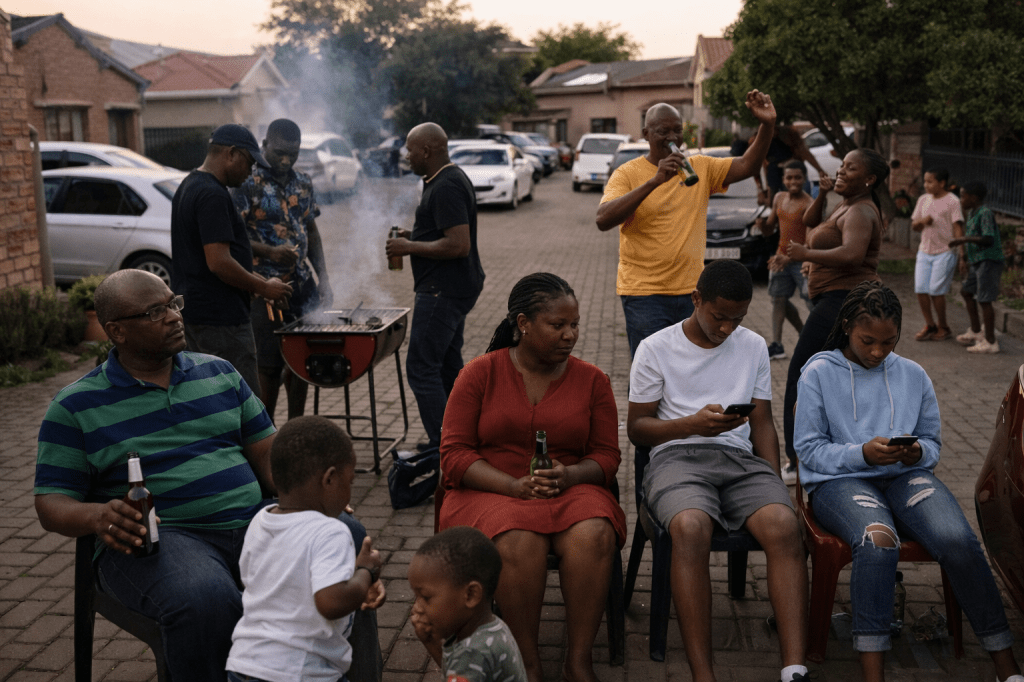
Over the Christmas period, I watched families come together in ways that felt familiar and expected. Homes filled up. Photos were taken. Conversations followed well rehearsed paths, work, children, progress, plans. From the outside, it looked like togetherness as we have come to know it.

Yet I could not escape the feeling that these gatherings no longer carry the same meaning they once did.

This is not a rejection of family, nor a dismissal of what these moments can offer. Family time can still be grounding and necessary. But I found myself questioning whether presence has begun to replace connection, and whether obligation is quietly being mistaken for closeness.

I wondered when going home became something we see as a duty rather than a choice.

Family as Ritual Rather Than Relationship

Christmas has become one of the most powerful family rituals we have. It is a fixed point in the calendar where attendance is assumed and absence is interrogated. Being there is often treated as proof of care, regardless of how that presence feels or what it costs.

Rituals are not inherently bad. They provide continuity and structure. But when rituals survive longer than their meaning, they risk becoming hollow performances.

In many families, Christmas gatherings now feel less like shared rest and more like scheduled compliance. You arrive because it is expected. You stay because leaving early raises questions. You participate because not participating carries consequences. The result is a room full of people who are physically present but emotionally guarded.

Togetherness, in this context, becomes procedural rather than relational.

The Quiet Pressure to Perform

One of the most striking features of modern family gatherings is how easily they turn into stages.

Success is displayed through cars parked outside, clothes worn inside, and stories told around the table. Conversations gravitate towards promotions, businesses, degrees, children’s achievements, and future plans. These topics are not harmful on their own. The problem lies in what they crowd out.

In unequal societies, achievement is not a neutral topic. It draws invisible lines between those who are progressing and those who are merely surviving. For some family members, these conversations affirm belonging. For others, they amplify silence.

When success becomes the safest currency of interaction, vulnerability disappears. Struggle becomes unspeakable. And the very space meant to offer refuge begins to reinforce hierarchy.

People leave feeling measured rather than held.

Obligation Versus Choice

There is a fundamental difference between being somewhere because you want to be there and being somewhere because you are supposed to be there.

Chosen presence allows honesty. Obligated presence requires performance.

Many people attend family gatherings while managing quiet resentment, emotional exhaustion, or unresolved conflict. They suppress parts of themselves to preserve harmony. They carry the emotional labour of keeping things pleasant. Over time, this creates distance rather than closeness.

In a world defined by rapid change, flexibility, and constant adaptation, this kind of emotional rigidity becomes unsustainable. Careers shift. Locations change. Identities evolve. Yet family expectations often remain frozen in an earlier version of who we were meant to be.

This mismatch creates tension, especially for those trying to survive and adapt in uncertain conditions.

When Family Becomes Restrictive

Family becomes restrictive not because it demands care, but because it sometimes demands conformity.

Unspoken rules govern how one should behave, what success should look like, how often one should show up, and what sacrifices are considered acceptable. Deviation is interpreted as distance. Distance is interpreted as betrayal.

Under these conditions, family stops functioning as a support system and starts operating as a control system.

This is rarely intentional. It emerges from fear, tradition, and inherited expectations. But the impact is real. Some people find that in order to grow, they need distance. Not because they lack love, but because proximity comes at the cost of selfhood.

That truth is difficult to admit in cultures that moralise family loyalty without examining its effects.

Holding the Positive and the Problematic

It is important to say this clearly. Family gatherings are not meaningless by default.

For many people, Christmas remains a rare moment of safety, laughter, and grounding. For some, it is the only time they feel seen. For others, it is a reminder that they are not alone.

These experiences are real and valid.

But so are the experiences of those who feel drained, diminished, or isolated by the same rituals. The problem arises when we assume a single meaning for family time and silence those whose experiences do not align with the ideal.

Togetherness does not guarantee connection. Tradition does not guarantee care.

Rethinking What Family Could Be

Perhaps the question is not whether family still matters, but how we allow it to matter.

What if family was less about annual obligation and more about honest presence. Less about display and more about listening. Less about measuring progress and more about acknowledging reality.

What if choosing distance at times was not seen as rejection, but as self preservation. What if showing up differently, or less frequently, did not automatically signal failure or disrespect.

These are uncomfortable questions. But discomfort often signals that a concept is being stretched beyond its original design.

Closing Reflection

I do not have final answers. What I have is a growing sense that the concept of family, like many social structures, is under strain. The world has changed faster than our expectations of one another.

Perhaps what we are witnessing is not the breakdown of family, but the fading of an old meaning that no longer fits the lives we are living. And perhaps the task ahead is not to abandon family, but to renegotiate it with honesty, humility, and care.

Not every gathering needs to be a performance. Not every absence needs to be explained. And not every family needs to look the same to still matter.

When Men Lose Their Place, Society Pays the Price

Given SHINGANGE

I arrived unannounced, as I often do. I took the street that passes the local shops ko Ramadan as we call them, partly out of habit, partly out of instinct. Some part of me suspected I might find him there. My father is one of those people who collect the different purses of those playing mochina. And there he was.

The street was alive with movement. Men and women standing and sitting in clusters, some by their usual spot there by the guy who fixes shoes. Conversations layered on top of each other. Waiting. Hoping. Calculating. Mochina is more than gambling. It is a ritual. Numbers are not random. They are stories. They represent events, dreams, memories, and losses. You read the morning, interpret life, and choose a number. You put money down not just on chance, but on meaning.

There was a time when mochina was played by old people in the community, and now, when I go there, I see that there are a lot of young people, I hasten to say young people, though, because maybe when I was young, the old people I am referring to were my age. Anyway, this spot in my community is busy, with a bottle store at the corner, a foreign-owned shop, which is why it is called Ramadan, and a spot where alcohol purchased from the liquor shop can be consumed. There is also Laphalapha, where they sell sphatlhos/kotas. Next to Laphalapha, there is a barber shop in one of the houses.

I parked. He walked over to my car. I asked for numbers while lodging a complaint that whenever I ask him for them, I never win. He starts telling me that it occurred to him that I might come home that day. As he tells me this, Bra Lucky passes by, and I ask him for a number. I think he mentioned 13. I don’t even know what it means, but I keep searching for loose change in the car, half embarrassed, half hopeful. I played along, knowing full well how this usually ends. “o mmone, Kenny?” my Dad asks if I have seen Kenny. Ntate Kenny is his best friend, and he points to the corner where the guy who fixes shoes is. I think my dad is old now because I haven’t driven past that spot yet. Anyway, I drive off and make sure to shout a greeting when I pass that spot.

He comes home, I ask if I had won, that time I don’t even remember my numbers, and he tells me that most people didn’t win and continues to explain how the mochina has played all of them, and that no one from his bag won. Even if his numbers don’t come up, but someone else does, there is a percentage that he gets, so you can imagine how it feels when even the other people do not win.

Later that day, after the formal greetings in the sitting room, I ask how he is, and he says he is ok. He had not been well, and I was travelling, so when I ask, I normally have a visual inspection of sorts to see if he is ok.

He then told me about an event they are going to that relates to the men’s forum. He has spoken about the forum before, and he normally tells me stories from there. Old men mostly. Pensioners. Men with time, memory, and regret. They sit together and talk about their lives. And often, they cry. This man’s forum is run by the local clinic.

It seems like this is something that they really look forward to as local men, not because they are weak. But because they finally have permission.

The stories are painfully similar. Men who were pushed out of their own homes. Men whose authority was steadily eroded until it disappeared. Men who watched their children grow up listening only to their mothers, not because the mothers were wrong, but because the fathers were sidelined, disempowered, or made irrelevant. Men who now look at their grown children and see struggle, confusion, anger, and failure. And they blame themselves. Mind you, these are men who, for the longest time they had to endure apartheid, being disrespected by young white men and women, calling them boy and all sorts of names.

This is where the conversation around men in our society becomes dishonest.

We talk endlessly about toxic masculinity. We talk very little about displaced masculinity. We speak loudly about men as problems, but quietly about men as casualties. In South Africa, especially, the dominant narrative paints men as irresponsible, violent, absent, or dangerous. Some men fit that description. Many do not. Yet all are judged by the same brush.

What happens when a man is told repeatedly that his role is unnecessary, suspect, or harmful?

He retreats.

He withdraws from decision-making. From discipline. From emotional investment. From responsibility. Sometimes he withdraws into alcohol. Sometimes into gambling. Sometimes into silence. Sometimes into forums where other broken men nod in recognition.

And then society acts surprised when children grow up without structure, without direction, without accountability. We talk about absent fathers without asking who pushed them out, who undermined them, or who taught them that their presence no longer mattered.

The men in these forums are not monsters. They are men who failed in environments that no longer knew what to do with them. Men who were never taught how to adapt their masculinity to changing social realities were only told that it was wrong. Men who were stripped of authority without being given a new role. Men who now carry the guilt of outcomes they had limited power to influence.

The pain cuts deeper when they speak about their children. Sons who drift. Daughters who struggle. Lives that never quite stabilise. The men internalise it as personal failure. The forum, meant to heal, often becomes a mirror reflecting everything they lost.

This is the uncomfortable truth. You cannot dismantle men’s role in society without consequences. You cannot weaken fathers and expect strong families. You cannot confuse masculinity and then blame men for being lost.

Being a man is not about domination. It is about responsibility. It is about presence. It is about guidance, protection, and sacrifice. When society attacks those foundations without offering alternatives, men do not become better. They become invisible.

And invisible men do not raise strong children.

If we are serious about fixing our social decay, crime, unemployment, and moral drift, we must stop having shallow conversations about men. We must stop reducing complex historical, economic, and cultural realities into slogans. We must create spaces where men are rebuilt, not shamed. Where fatherhood is reinforced, not questioned. Where masculinity is redefined with clarity, not contempt.

Those old men sitting in forums crying are not the end of the story. They are a warning.

Ignore them, and the next generation will sit in the same circles, with even less hope, even less structure, and even more resentment.

This is not about men versus women. It is about balance. About roles. About accountability. About restoring order in a society that has confused liberation with destruction.

When men lose their place, society does not become freer. It becomes weaker.

And we are already paying the price.

Hoba Monna (being a man) and the Quiet Weight Men Carry

Given SHINGANGE

Hoba Monna by Sannere featuring Selimo Thabang, Omali Themba, Flash Cortez, Wave Rhyder, Marcx Brass) 

I hesitated before writing and publishing this piece during the 16 Days of Activism for No Violence Against Women and Children, a period rightly dedicated to confronting gender based violence and the harm it causes. I am conscious that speaking about men’s struggles at this time can easily be misread as deflection, minimisation, or even quiet support for violence, as if acknowledging the weight men carry somehow denies the suffering of women. That fear of misinterpretation is real, and it says something important about the moment we are in. Yet silence is not neutrality. Avoiding honest reflection because it may be misunderstood only narrows the conversation further. This article is not an attempt to excuse harm or shift blame. It is an attempt to understand the human conditions under which many men are living, because without that understanding, the very violence we seek to end will continue to reproduce itself in quieter, less visible ways.

Sometimes a song does what public debates, campaigns, and opinion pieces struggle to do. It names a feeling without dressing it up. Hoba Monna does exactly that. It speaks plainly about what it feels like to be a man carrying responsibility in silence, and in doing so, it exposes a reality many men live but rarely articulate.

The title itself is revealing. Hoba monna means “to be a man”. Not to perform masculinity. Not to dominate. Simply to exist as a man. Yet from the opening hook, the song makes it clear that this existence has become exhausting.

“Ke fihletse boemong ba ho tsofala hoba monna, ke fihletse boemong ba ho utloa hore ho thata hoba monna.”

This is not exaggeration. It is accumulation. The repetition signals long term emotional fatigue, the slow wearing down that comes from expectation layered on top of expectation. Being a man, in this telling, is not dramatic. It is heavy.

Strength Without Space to Falter

In the first verse, the artist captures a contradiction many men experience early in life.

“People keep judging me, when I go weak, they forget I’m human and I also breathe.”

Men are permitted strength, but not struggle. The moment vulnerability appears, humanity is withdrawn. Weakness is treated as failure rather than as a normal part of being human.

Yet responsibility remains non negotiable.

“I gotta confide, I gotta provide in the process so my family can eat.”

There is no rejection of duty here. The pain comes from being expected to provide and endure without acknowledgement of cost. Men are required to function regardless of their internal state. When they do not, judgment follows swiftly. Pressure becomes personal rather than contextual. The man is blamed, while the conditions surrounding him remain invisible.

Becoming a Man Without Guidance

One of the quietest lines in the song is also one of the most revealing.

“And I wish my father could’ve shown me a hint.”

This is not accusation. It is absence speaking. It reflects the experience of many men who are expected to know how to be responsible, disciplined, and emotionally regulated without ever having seen those qualities modelled consistently.

Manhood is treated as instinctive rather than learned. When men struggle, the struggle is moralised instead of understood. Many men are navigating adulthood without maps, mentors, or reference points, while still being held to rigid standards.

Culture and the Discipline of Silence

The second verse, delivered in Sesotho, speaks directly to cultural training.

“Society e re rutile ho nka ka sefuba, ene re nke ka senna.”

Society taught us to take everything on the chest and take it as a man

This is not mockery of culture. It is description. Emotional restraint has long been framed as strength. Endurance as virtue. But the song does not romanticise this conditioning. It shows where it leads.

“Ho fihlela moo e ka reng kea khathala.”

Until the point where one becomes exhausted.

When pain has no outlet, it does not disappear. It accumulates. Silence does not build resilience indefinitely. It eventually produces numbness, withdrawal, or collapse.

Responsibility Without Support

One of the most important moments in Hoba Monna comes through a question that reveals imbalance.

“Ba re o hlokomele bana ba heno, empa nna ke hlokomelewa ke mang?”

They tell me to take care of my siblings, but who takes care of me?

This reflects a familiar reality in many African households. Men are expected to support siblings and extended family, to be stable, to be reliable, to carry others.

The follow up question sharpens the point.

“Ba re o ba loanele bana ba heno, empa nna ke loanela ke mang?”

They tell me to fight for my siblings, but who fights for me?

This is not self pity. It is recognition of imbalance. Responsibility flows outward. Care rarely flows back.

Smiling While Breaking

The final verse captures a reality many men live daily.

“Ke tlameha ke tsoe ke phande ke smile le batho kantle, ke robegile ka hare.”

I have to go outside hustle and smile with people, while I am broken inside.

This is not performance for praise. It is survival. In a society that responds harshly to male vulnerability, composure becomes armour. Smiling becomes a way to remain functional even while internally unraveling.

Why Hoba Monna Matters

Hoba Monna matters because it humanises men without excusing harm. It does not deny violence, irresponsibility, or failure. It asks a deeper question. What conditions produce men who are emotionally exhausted, silent, and disengaged?

Men carry pressures that are rarely named, let alone addressed. Economic strain. Cultural silence. Extended responsibility. Emotional isolation. None of these excuse destructive behaviour. Ignoring them guarantees its repetition.

Strength should not require emotional erasure. Responsibility should not require loneliness. Being a man should not mean carrying unbearable weight alone.

Hoba Monna is not asking for sympathy. It is asking for recognition. Recognition that men are human, that endurance has limits, and that silence is not the same as strength.

Sometimes music tells the truth long before society is ready to hear it.

What Does It Mean to Be a Modern Man in South Africa?

There is a quiet crisis unfolding in South African society, and it is not being spoken about honestly. It sits beneath the headlines, beneath the slogans, beneath the well funded campaigns and carefully worded statements. It is the crisis of what it means to be a man, and whether society still knows how to speak to men without turning them into symbols of everything that is wrong.

To be clear from the outset, this is not an attempt to deny the reality of violence, abuse, or harm committed by men. Those realities are undeniable and must be confronted directly. But confronting harm is not the same thing as condemning an entire group into silence, shame, and disengagement. Somewhere along the way, South Africa has begun to confuse accountability with collective guilt. That confusion is costing us more than we are willing to admit.

A generation of men is growing up hearing what they must not be. Do not be dominant. Do not be assertive. Do not be too strong. Do not lead in the wrong way. Do not speak incorrectly. Do not exist incorrectly. Yet there is far less clarity about what men should be. And when a society only knows how to criticise, but not how to guide, it should not be surprised when the result is confusion rather than change.

Historically, manhood in South Africa was not a vague or abstract idea. Across cultures and communities, despite their differences, there were shared expectations. A man was expected to take responsibility. He was expected to protect, to provide where possible, to discipline himself before disciplining others, and to anchor a family and a community. These roles were not always fulfilled perfectly, and they were often distorted by patriarchy, violence, and power. But they provided a moral structure. They gave men something to grow into.

That structure has largely collapsed, not because it was consciously dismantled with care, but because it was attacked without being replaced. Economic exclusion has made the provider role unreachable for millions. Unemployment has stripped men of dignity long before any social campaign ever did. Fatherlessness has removed mentorship at scale. Historical trauma has gone unprocessed. Into this vacuum, society has inserted a single dominant message, men are the problem.

Public discourse increasingly frames men primarily through statistics of violence, abuse, and crime. Media narratives repeat these images until they become identity. Campaigns, often well intentioned, speak about men as risks to be managed rather than people to be developed. Masculinity itself is treated as something that must be softened, neutralised, or apologised for, rather than disciplined and directed.

The idea of toxic masculinity is a good example. At its best, it was meant to describe specific harmful behaviours. At its worst, it has become a blunt instrument, used to suggest that masculinity itself is suspect. The problem is not that men are strong, assertive, or capable of leadership. The problem is what they do with those traits, and whether they are guided by moral responsibility. But this distinction is often lost. When masculinity is framed primarily as a danger, many men stop engaging altogether.

The psychological cost of this matters. When men are constantly told that their instincts are wrong, their presence is threatening, and their history is shameful, many respond not with reform, but with withdrawal. Silence replaces participation. Apathy replaces leadership. Some retreat into resentment. Others simply opt out of society altogether. None of these outcomes serve women, children, or communities.

There is also a deep contradiction at play. Society still expects men to show up in moments of crisis. To protect. To intervene. To take responsibility when things go wrong. Yet at the same time, it strips them of confidence, moral authority, and legitimacy. You cannot ask men to lead while constantly telling them they are unfit to do so. You cannot expect responsibility from people who are treated as permanent suspects.

This contradiction is especially stark in the South African context. Men are expected to navigate extreme inequality, unemployment, and social instability, while being held to moral standards that assume access to resources, opportunity, and support. A young man in a township is told to be responsible, but denied work. Told to be present, but raised without a father. Told to respect women, but shown daily through lived experience that power is exercised without fairness or justice. This does not excuse harmful behaviour, but it does explain why simplistic narratives fail.

What is missing from the conversation is a serious discussion about male development. Not punishment. Not slogans. Development. Men are not born knowing how to be disciplined, restrained, or ethical. These are learned behaviours, shaped through mentorship, expectation, and consequence. When society abandons this work, and replaces it with condemnation, it forfeits the very change it claims to want.

Accountability is essential. But accountability without dignity is ineffective. Men respond to standards when those standards are clear, consistent, and rooted in respect. Historically, rites of passage, work, fatherhood, and community roles provided these standards. Today, many men drift without markers, without recognition, without a sense of earned identity. In that vacuum, some seek belonging in destructive ways.

It is also worth asking who benefits from a society where men are disengaged. A passive man does not build. A confused man does not lead. A resentful man does not cooperate. The weakening of men does not strengthen women. It weakens families. Children do not benefit from absent fathers, whether that absence is physical or emotional. Communities do not thrive when half their population is treated as a problem to be managed rather than a resource to be cultivated.

This is not a call to return to outdated or abusive models of masculinity. Dominance, entitlement, and violence have no place in a healthy society. But neither does moral erasure. A constructive model of modern manhood must be rooted in responsibility, self mastery, service, and courage. Not the courage of aggression, but the courage of restraint. Not dominance over others, but mastery over oneself.

A modern South African man should be held to high standards. He should be expected to protect without controlling, to lead without abusing, to provide where possible and to contribute where he cannot. He should be challenged to confront his own behaviour honestly. But he should also be spoken to as someone capable of growth, not as an inherent threat.

The current narrative often fails this test. It speaks about men, not to them. It diagnoses without mentoring. It condemns without constructing. In doing so, it undermines its own goals. Social change does not happen through humiliation. It happens through clarity, expectation, and inclusion.

If South Africa is serious about addressing violence, inequality, and social breakdown, it must re learn how to speak to men with both firmness and respect. Men must be included as part of the solution, not positioned permanently as the source of the problem. This requires courage, because it means resisting easy narratives and simplistic villains.

A society that wants better men must be willing to invest in making them. That means mentorship. That means work opportunities. That means fathers who are supported, not mocked. That means cultural conversations that distinguish between harmful behaviour and male identity. That means acknowledging historical and economic realities without using them as excuses or weapons.

Being a modern man in South Africa should mean choosing responsibility in a context that often denies recognition. It should mean discipline in a culture that rewards excess. It should mean standing up, not because you are told you are dangerous, but because you are reminded that you matter.

Until we can have that conversation honestly, we will continue to talk past each other. And in that silence, the quiet crisis of men will deepen, with consequences that society will eventually be forced to confront.

the views we have matter

IMG_4022

I woke up much earlier today and had time to do everything I usually have to do in the morning. The difference was that I was not in a hurry….

I also had time to sit and look outside my window to a view I have had for the past year but never really appreciated it or thought much about it…..

From the third floor of this place I sometimes spend my nights at I have two particular views, one is that of the car auction house SMD and the other is of the planes landing and flying out of the airport……..

I have a lot to say about both, but for now, I will focus on the car auction house, which is usually filled with people who walk around to look at the cars they will be bidding on…….

After they walk through the many cars, they then proceed to the security guard who searches them before they move into the hanger……….

Minutes later, a loud voice echoes to the surrounding areas as the auctioneer tries as much as he can to get the best deal for the many cars outside………

But then again, the story is not about the auction but the items being auctioned………..

These thoughtfully branded cars have stories to share, but I will try to share them as much as I can imagine……

One thing that stands out is that they too had a life; one can imagine the hampers given to the buyers when the cars were purchased, the road trips, the tears and the first kisses in these cars…..

Not to mention the babies made in some of these cars; they have seen it all. The tears of joy and sorrow, the pushes…….

All the mechanics that have gone under them touched them, stripped, put them together, the car washes they have been to, the alcohol and food spills, they have seen it all.

These cars are not in the same condition, some will never be repaired thoroughly or repairable, but all these cars are broken one way or the other…..

The owners have moved on to getting new cars. They sit there waiting for someone to notice them, even though they are as broken, they wait for someone to give them another chance………

Someone to bid on them so they can continue to live……

Even those who know very well that they will not be themselves again hope to give life to others and hope to be given another chance through others…..

As the potential buyers walk through the yard, they silently scream, pick me pick me pick……..

They too want to be given a chance, and later in the day some will leave the yard to their new homes either to be refurbished and pimped or to be taken apart………

Either way, they will have left the yard with the hope of another chance…..

A chance that is dependent on the potential buyer……

I suspect life is like this, I don’t have much to say on that, but hopefully, this makes sense. 

You may be one of these cars, and one day soon, your buyer will notice you and restore you……

Keep shining……..

The views we have matter….more so when we take time to appreciate them.

Conversations…..

What conversations are you involved in? What conversations are taking place, but you are not a part of? I am asking about conversations because they are the safest form of communication, or rather, they should be.

conversations

What conversations are you involved in? What conversations are taking place, but you are not a part of? I am asking about conversations because they are the safest form of communication, or rather, they should be.
A conversation is defined as “a talk, especially an informal one, between two or more people, in which news and ideas are exchanged”. This is a platform where everything that separates us does not matter – race, level of knowledge, position, etc. One would also assume that this form of communication requires those involved in it to have the ability to listen, have some form of emotional intelligence, and even be able to communicate their views clearly.
A lot of work goes behind having conversations that bring positive change, whether it be at a personal level, organizational level, or even at a national and international level.
Unfortunately, while many platforms are created in the guise of facilitating such conversation more often than not, they tend to take a different path. You also find that if someone engages in what is supposed to be a conversation with a paternalistic approach, the process loses its meaning. You often see a situation where one party is not free to engage because they think their input is subordinate to the inputs of the other party.
Be involved in conversations. If you are not involved in any, find one that you can be a part of.
There are different kinds of conversations. With some, we may not be granted the opportunity to participate in them, whereas it is up to us with others. Take, for instance, conversations that have to do with the country’s well-being: I believe we should all be involved in such conversations. While I have to acknowledge that it is not easy to have such, it is only through having them that we shall refine our ability.
In summary, conversations are a critical way of communicating, and we are obliged to have them. There are, however, prerequisites to having effective conversations. Some conversations are essential for us, such as conversations that have to do with national matters. We have to be involved and understand what it means to be involved, be clear as to what we have to bring to the table.
My current conversations………..

convo 2

I am involved in many conversations and would like to have many more conversations. I am mainly engaged in cyber security and business, knowledge, social issues, etc.
My time is consumed by the cyber security conversation. I am not complaining, or maybe I should rather say a security conversation.
Over the past five years, I have spent time researching the field, and I continue to do so because of its ever-changing nature. I have also been privileged enough to be involved in different government departments and the private sector dealing with cyber security. It continues to be an exciting field. At the same time, when you look at how some countries like South Africa are dealing with it, you can’t help but worry.
As a side note, I just want to say that sometimes the people having the “conversation” are wrong. For various reasons, of course…
…But going back to the topic, I think we need to restart the conversation about cyber security, and we must not be shy to do so. There is absolutely nothing wrong with continuing, especially when the context requires a rethink.
Perhaps we should start by looking at the National Development Plan as a guiding document for what the country wants to achieve. I think we have not fully internalized the plan, and we are found wanting all the time. So, any conversation with a national bearing must first start with an understanding and an appropriate interpretation of the NDP.
I think we have missed an opportunity to do this, but all is not lost. Every conversation must be guided by some rules written and unwritten (e.g. relationship rules). Just like the constitution, whatever we plan to do, must not in any way be unconstitutional.
What we have experienced as a country is that we have written policies that we cannot implement. A lazy conclusion in many cases is that we have an implementation problem. We assume that the policies are not the problem; we are the problem because we fail to implement them. Once a policy has been signed, we stick to it, without ever considering that maybe the signed policy is not “implementable” or perhaps the policy itself is no longer relevant because the context has changed.
South Africa has the National Cybersecurity Policy Framework signed by Cabinet in 2012. This happens to be the only guide that deals with cybersecurity directly. Since its introduction, one would assume that much progress would have been made, and we would be much safer. However, we still have a cybercrime and cybersecurity bill in parliament, and I doubt it will be signed soon.
In this case, the conversation we should have answered the “so what now?” question. What does this reality mean for us as a country that is of late not doing very well economically? I know for a fact that there is a conversation taking place, or rather that has been taking place, but the same questions above should be raised. Are those involved in the conversation the right people? I think not. So, while we may not be directly involved in some of the conversations that have an impact on our lives, especially where such conversations are taking place on our behalf, we have to make sure that we know those who are representing us and be sure that they have what it takes to represent us as well.
Although this is a critical topic, it is not the only topic that we all should be having conversations about. Even in matters that we think we already have under control, we must always create platforms where we can evaluate if we are on the right track through conversations.
Let’s sit down and have a conversation. Are you prepared?

Bra G

we are not angry enough

Dumelang Bagaetsho : ) , So a lot has been going on in the country lately as always. But you know when you listen to all the conve

getimage.aspx

rsation that we are having you tend to see that we are not ok upstairs. Yest
erday’s conversation was about the shackles on one Duduzane Zuma when he appeared in court. So, you can already see that, everything always gets to be racialized. I saw a tweet where they have that guy of the Fees Must Fall in shackles in court and then also have an image of those guys that put that guy in a coffin without shackles while they were also in court.

Continue reading “we are not angry enough”

“All hands on deck”

allhandsondeck
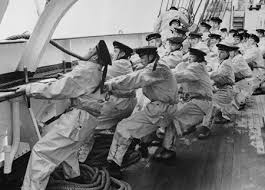
“All Hands on Deck” is defined as an order to every member of a ship’s crew to report to the deck immediately, usually in an emergency.

What is happening in our country at the moment requires this. It is an “all hands on deck” moment which means that you stop whatever it is that you are doing, whatever seems important now, and do what is required. It is a phase so imperative that if you don’t do it, that which was and is important will not matter anymore.

Perhaps we shouldn’t look too far – many countries on the African continent went through the same stages and today their governments struggle to keep their countries functioning. Our story is not a new one, ours is probably going to be one of foolishness where in the face of so many examples, we will have become like many on the continent.

The thing about the “all hands on deck” command is that it is called by the Captain and everybody already knows what they need to do. In our country you can say that many are trying to give this instruction/order/recommendation but they are not recognised. They are not the Captains of the ship. Who then gives the “all hands on deck” command when the emergency that has to be dealt with is the fault of the Captain and even worse those that are close to him? That means you that you cannot even rely on the second in command.

Such is the story that is unfolding right in front of our eyes, where those that are about to sink with the ship are not aware of the “all hands on deck” command and don’t even know what they would have to do even if they did. The ship cannot be steered in any direction of safety because the bridge (control room) itself is occupied by those that are to blame for what is happening.

We need leadership, the kind that will break down the door to the bridge and take over, the kind that will do the unimaginable because the imaginable seems worse than the unimaginable. We are like a house owner watching their house burn. What’s even worse is that we are standing with buckets filled with water, but we are just to dumbfounded by the flames.

I think young people should lead us, the old people are old. And we all know what being old means.

“All hands on deck”. What does this mean? It means that we have reached that moment. Even if we realise now that we have reached that point,
whatever actions we take will not be about saving our country, it will just be about saving the little that’s left of it.

“All hands on deck”

connecting the dots

there are many websites that we use to decide on the names to take for whatever we want to name. Some of us even go as far as google the names online when we are pregnant. This is how the naming process is, a name is permanent you don’t want to have a name that you will regret having tomorrow. Hell, most black people have names that they wish they could change now, names like Piet, etc (can’t think of other names, but you know what i mean).

new ctd logo 2014 Continue reading “connecting the dots”