The Looming Shadow of Cognitive Warfare: A Potential Threat to the 2024 South African Elections

Cognitive warfare is not only an attack on what we think. It is an attack on our way of thinking (Zac Rogers)

Introduction

South Africa’s 2024 elections loom large, not just as a contest for political power but as a potential battleground for a new, insidious form of warfare: cyber-cognitive warfare. Fueled by rising internet penetration and social media’s pervasive influence, this new battlefield threatens to weaponise misinformation and manipulate minds. This paper explores how rapid internet penetration, the ubiquity of social media, and the vulnerabilities they expose make South Africa’s population susceptible to manipulation through online information operations. To safeguard the integrity of democracy, we must dissect the arsenal of digital manipulation and prepare defences before the lines are drawn.

Defining the Battlefield: Cognitive Warfare

The Shifting Landscape of Warfare: Warfare has undergone a dramatic transformation in recent decades. We’ve moved beyond the physical battlefields of conventional war, entering an era defined by social and ideological threats. Think beyond tanks and bombs – imagine manipulation through mass media and sophisticated technologies.

A New Breed of War: Enter Cognitive Warfare: – This new type of conflict, dubbed “cognitive warfare,” is unlike anything we’ve faced before. While it draws elements from kinetic warfare and hybrid warfare, its reach and impact are far more sinister. Instead of fighting for physical territory, cognitive warfare focuses on controlling or altering how people process information. It’s essentially manipulating minds to achieve strategic goals.

Understanding Cognitive Warfare: Definitions vary, but the essence of cognitive warfare lies in using technology to influence, exploit, and ultimately, control human cognition. This manipulation often happens without the target’s awareness, making it even more insidious. It’s a silent battlefield where the enemy is your own mind.

The Goals of Cognitive Warfare: Destabilization and influence are the primary objectives. Sowing discord within societies, shaping beliefs, swaying public opinion, influencing political outcomes, creating social unrest and instability, eroding trust in institutions and governments and influencing actions are all part of the game. Imagine enemies subtly manipulating public opinion to weaken governments or trigger internal social unrest.

The arsenal of cyber-cognitive warfare is diverse. Misinformation, deliberate falsehoods spread to mislead, and disinformation, manipulated or fabricated information used to sow discord, are potent weapons. Cyber-enabled information operations and coordinated campaigns to disseminate these narratives through social media, online forums, and seemingly legitimate news outlets amplify their impact.

Not Just What We Think, But How We Think: Cognitive warfare isn’t just about attacking our thoughts, it’s about hijacking our entire thinking process. This means exploiting our mental biases, triggering emotional responses, and ultimately, guiding our actions to serve the attacker’s agenda.

Vulnerability in the Digital Age: South Africa’s Susceptible Landscape

South Africa’s rapidly growing internet penetration and social media usage create a fertile ground for cognitive warfare. According to Statista, internet penetration in South Africa is expected to reach 64.7% by 2024, and mobile data subscriptions exceeding 45 million create a fertile ground for cyber-cognitive warfare. Social media platforms like Facebook, Twitter, and WhatsApp significantly sway public discourse. The new kid on the block is TikTok, which is growing exponentially in terms of users. The difference between TikTok and the other social media platforms is that companies in the West do not own it, and it is seen as pushing the agenda of the Chinese government. This increased online engagement and a complex socio-economic landscape make the population susceptible to manipulation.

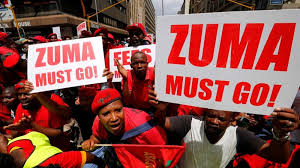
Existing societal vulnerabilities exacerbate this exposure. Socio-economic inequalities, political polarisation, and ethnic tensions provide fertile ground for divisive narratives to take root. The 2014 “Fees Must Fall” protests, the recent xenophobic attacks, and the July 2021 social unrest highlight how online misinformation can ignite real-world consequences.

South Africa’s susceptibility to the vulnerabilities of the digital age stems from a complex interplay of factors, ranging from infrastructure gaps and digital literacy deficiencies to regulatory limitations and evolving cyber threats.

Global Precedents: Learning from Past Battles

South Africa is not alone in facing the perils of cyber-cognitive warfare. The 2016 US elections stand as a stark reminder of its potential: Cambridge Analytica’s targeted micro-advertising and weaponised personal data exposed the vulnerability of democratic processes to online manipulation.

Closer to home, the Bell Pottinger scandal showcased how disinformation campaigns can be used to sow racial division and destabilise governments. Similar tactics have been deployed in elections across the globe, from Kenya to the Philippines, demonstrating the widespread application of cyber-cognitive warfare.

Cyber as a Modern Battlefield: Beyond Information Warfare

Cyber-cognitive warfare extends beyond manipulating public opinion. In recent conflicts, like the Ukraine-Russia war and the Israel-Palestine clashes, cyberattacks have targeted critical infrastructure, disrupting power grids and communication networks. These attacks aim to sow panic, cripple vital services, and undermine public trust in authorities.

The Battlefield: Cyber, Information, and Cognitive Warfare

Before delving deeper, it’s crucial to differentiate the various domains of warfare relevant to this discussion. Cyber warfare involves attacks on computer networks and infrastructure. Information warfare focuses on manipulating the information landscape through propaganda and misinformation. Psychological warfare aims to weaken an opponent’s morale and resolve.

Cognitive warfare takes the manipulation game a step further. It seeks to influence the target’s cognitive processes, including perception, memory, and reasoning, through targeted disinformation, emotional manipulation, and social engineering techniques. As François du Cluzel posits, it’s “an attack on truth and thought” to undermine free will and shape desired behaviours.

Preparing for the 2024 Battle: Building Defences and Fostering Resilience

The 2024 elections necessitate a multi-pronged approach to counter cyber-cognitive warfare. Media literacy initiatives to equip citizens with critical thinking skills and the ability to discern misinformation are crucial. Regulatory frameworks to hold social media platforms accountable for curbing the spread of harmful content are equally important.

Furthermore, fostering open and transparent dialogue across political and social divides can weaken the appeal of divisive narratives. The South African government, civil society organisations, and tech companies must work together to build resilience against cyber-cognitive attacks and safeguard the integrity of the 2024 elections.

Conclusion: Protecting Democracy in the Digital Age

Cyber-cognitive warfare is not a distant threat but a reality with immediate consequences. South Africa’s 2024 elections offer a critical test of the nation’s resilience against this emerging form of warfare. By acknowledging the vulnerabilities, learning from past examples, and building collective defences, South Africa can navigate the complex digital landscape and ensure that its democracy emerges more robust in the face of these new challenges.

The 2024 South African elections are critical in the nation’s history. The potential for cyber-enabled influence campaigns, particularly those employing cognitive warfare tactics, cannot be ignored. By understanding the threat landscape, equipping the populace with critical thinking skills, and promoting responsible online practices, South Africa can safeguard its democratic processes and ensure that informed citizens, not manipulated minds, decide the upcoming elections.

Conversations…..

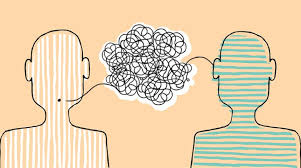
What conversations are you involved in? What conversations are taking place, but you are not a part of? I am asking about conversations because they are the safest form of communication, or rather, they should be.

conversations

What conversations are you involved in? What conversations are taking place, but you are not a part of? I am asking about conversations because they are the safest form of communication, or rather, they should be.
A conversation is defined as “a talk, especially an informal one, between two or more people, in which news and ideas are exchanged”. This is a platform where everything that separates us does not matter – race, level of knowledge, position, etc. One would also assume that this form of communication requires those involved in it to have the ability to listen, have some form of emotional intelligence, and even be able to communicate their views clearly.
A lot of work goes behind having conversations that bring positive change, whether it be at a personal level, organizational level, or even at a national and international level.
Unfortunately, while many platforms are created in the guise of facilitating such conversation more often than not, they tend to take a different path. You also find that if someone engages in what is supposed to be a conversation with a paternalistic approach, the process loses its meaning. You often see a situation where one party is not free to engage because they think their input is subordinate to the inputs of the other party.
Be involved in conversations. If you are not involved in any, find one that you can be a part of.
There are different kinds of conversations. With some, we may not be granted the opportunity to participate in them, whereas it is up to us with others. Take, for instance, conversations that have to do with the country’s well-being: I believe we should all be involved in such conversations. While I have to acknowledge that it is not easy to have such, it is only through having them that we shall refine our ability.
In summary, conversations are a critical way of communicating, and we are obliged to have them. There are, however, prerequisites to having effective conversations. Some conversations are essential for us, such as conversations that have to do with national matters. We have to be involved and understand what it means to be involved, be clear as to what we have to bring to the table.
My current conversations………..

convo 2

I am involved in many conversations and would like to have many more conversations. I am mainly engaged in cyber security and business, knowledge, social issues, etc.
My time is consumed by the cyber security conversation. I am not complaining, or maybe I should rather say a security conversation.
Over the past five years, I have spent time researching the field, and I continue to do so because of its ever-changing nature. I have also been privileged enough to be involved in different government departments and the private sector dealing with cyber security. It continues to be an exciting field. At the same time, when you look at how some countries like South Africa are dealing with it, you can’t help but worry.
As a side note, I just want to say that sometimes the people having the “conversation” are wrong. For various reasons, of course…
…But going back to the topic, I think we need to restart the conversation about cyber security, and we must not be shy to do so. There is absolutely nothing wrong with continuing, especially when the context requires a rethink.
Perhaps we should start by looking at the National Development Plan as a guiding document for what the country wants to achieve. I think we have not fully internalized the plan, and we are found wanting all the time. So, any conversation with a national bearing must first start with an understanding and an appropriate interpretation of the NDP.
I think we have missed an opportunity to do this, but all is not lost. Every conversation must be guided by some rules written and unwritten (e.g. relationship rules). Just like the constitution, whatever we plan to do, must not in any way be unconstitutional.
What we have experienced as a country is that we have written policies that we cannot implement. A lazy conclusion in many cases is that we have an implementation problem. We assume that the policies are not the problem; we are the problem because we fail to implement them. Once a policy has been signed, we stick to it, without ever considering that maybe the signed policy is not “implementable” or perhaps the policy itself is no longer relevant because the context has changed.
South Africa has the National Cybersecurity Policy Framework signed by Cabinet in 2012. This happens to be the only guide that deals with cybersecurity directly. Since its introduction, one would assume that much progress would have been made, and we would be much safer. However, we still have a cybercrime and cybersecurity bill in parliament, and I doubt it will be signed soon.
In this case, the conversation we should have answered the “so what now?” question. What does this reality mean for us as a country that is of late not doing very well economically? I know for a fact that there is a conversation taking place, or rather that has been taking place, but the same questions above should be raised. Are those involved in the conversation the right people? I think not. So, while we may not be directly involved in some of the conversations that have an impact on our lives, especially where such conversations are taking place on our behalf, we have to make sure that we know those who are representing us and be sure that they have what it takes to represent us as well.
Although this is a critical topic, it is not the only topic that we all should be having conversations about. Even in matters that we think we already have under control, we must always create platforms where we can evaluate if we are on the right track through conversations.
Let’s sit down and have a conversation. Are you prepared?

Bra G

we are not angry enough

Dumelang Bagaetsho : ) , So a lot has been going on in the country lately as always. But you know when you listen to all the conve

getimage.aspx

rsation that we are having you tend to see that we are not ok upstairs. Yest
erday’s conversation was about the shackles on one Duduzane Zuma when he appeared in court. So, you can already see that, everything always gets to be racialized. I saw a tweet where they have that guy of the Fees Must Fall in shackles in court and then also have an image of those guys that put that guy in a coffin without shackles while they were also in court.

Continue reading “we are not angry enough”

we are not lost, we are where we should be, period……

imagesYou can never be lost when you don’t know where you want to be in the first place.

It is supposed to be simple, but it is not. We just have to decide what kind of a country we want to live in and then decide what kind of leadership will take us there.
 
So if we have not done that, we cannot continue to complain and because where we are is where we should be. If you do not know what we represent as a country, what we stand for, maybe you should sit down.
I am not saying I know also (i am sitting down), but one could say, it is unfair of me to expect things to just happen just because nje.

Continue reading “we are not lost, we are where we should be, period……”

Again and then we wait for next year

It is that time of the year again where political points will be scored yet again, at least that will be the intention. I’ve seen some headlines indicating that the marks or the results have been adjusted up or something like that. What does this mean really? I don’t know.

Anyway, again we will have the same situation as the year before and the other years before where of course a few kids will make the headlines for having attained some distinctions. The is our yearly reality. After they have received them, they will start the journey into trying to get into institutions of higher learning, armed only with their results. For many, at this time it does not matter what they had planned to study because either they know they do not have the money to pay for such studies or their results are not good enough.

They will end up having enrolled for something they’ve heard of for the first time when they go to these institutions. Ok lets say many enroll, what we know for a fact is that by June many will have dropped out, many will have become something they never thought they would become because they want to study. But where are they? What becomes of these kids that their parents send off to study in foreign towns, hoping that they will come back one day to take care of them.

This is a painful reality and one that points to the many challenges that we face as a society. I do not have to mention that this is what BLACK kids face, it has black written all over it.

But then “BLACKS” need to do something about it. It is up to us to solve it. WE need to start with characterizing the problem and then get on with it.

We cannot continue like this. Lets talk about how we can change this.

Don’t judge me V 2


Over the past few months we have seen many young graduates standing by the roadside with boxes written their qualifications in an effort to raise some awareness about their challenges of unemployment. In essence, they are saying:

Dear Society, 

I have done everything that you asked of me. I avoided drugs, teenage pregnancy, alcohol in school and even though at times I had to eat corn flakes for supper I made it here, even though at times I had to wear those high heels to go to Cubana and be relevant just so that I can feel human, I made it here. All those sleepless nights in the computer lab and library, I am here.

But what is this; you never prepared me for this? All you said, Society was that if I do all this, I will be fine. And really towards the end of my studies, I could taste it, I already looked at cars that I would buy first, I already saw that fridge that I was going to buy for my mother, the shoes I want to wear. This was a few months ago.Mind you, I also have my sibblings who have been waiting for me so that their lives could change. But it is tougher now, I knock and knock no one opens, I am now classified as an unemployed graduate, and only now I see that those that were ahead of me, are the same, if they are not employed in retail shops, they either walk around with their envelopes responding to any call for leanership, flip some are even registering companies now and calling themselves entrepreneurs even though they never imagined themselves being that. 

So, know that when I stand by the street corner, I have tried it all, and actually, my whole life has been about trying.

Yours in Unemployment

This is the reality we live in now, and no one seems to be coming up with the answers, and once again this shows how divided we are and how some legacies still persist in society.

Continue reading “Don’t judge me V 2”

“All hands on deck”

allhandsondeck
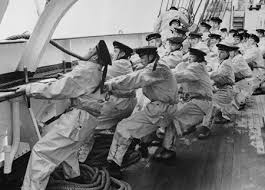
“All Hands on Deck” is defined as an order to every member of a ship’s crew to report to the deck immediately, usually in an emergency.

What is happening in our country at the moment requires this. It is an “all hands on deck” moment which means that you stop whatever it is that you are doing, whatever seems important now, and do what is required. It is a phase so imperative that if you don’t do it, that which was and is important will not matter anymore.

Perhaps we shouldn’t look too far – many countries on the African continent went through the same stages and today their governments struggle to keep their countries functioning. Our story is not a new one, ours is probably going to be one of foolishness where in the face of so many examples, we will have become like many on the continent.

The thing about the “all hands on deck” command is that it is called by the Captain and everybody already knows what they need to do. In our country you can say that many are trying to give this instruction/order/recommendation but they are not recognised. They are not the Captains of the ship. Who then gives the “all hands on deck” command when the emergency that has to be dealt with is the fault of the Captain and even worse those that are close to him? That means you that you cannot even rely on the second in command.

Such is the story that is unfolding right in front of our eyes, where those that are about to sink with the ship are not aware of the “all hands on deck” command and don’t even know what they would have to do even if they did. The ship cannot be steered in any direction of safety because the bridge (control room) itself is occupied by those that are to blame for what is happening.

We need leadership, the kind that will break down the door to the bridge and take over, the kind that will do the unimaginable because the imaginable seems worse than the unimaginable. We are like a house owner watching their house burn. What’s even worse is that we are standing with buckets filled with water, but we are just to dumbfounded by the flames.

I think young people should lead us, the old people are old. And we all know what being old means.

“All hands on deck”. What does this mean? It means that we have reached that moment. Even if we realise now that we have reached that point,
whatever actions we take will not be about saving our country, it will just be about saving the little that’s left of it.

“All hands on deck”

Zuma must not fall……

If only i could add an emoticon, it would be that brown one that looks like a monkey that has its hands over its eyes. How fitting. But seriously now, and i think i am not alone here but of course i think different reasons would be sighted(hope this word is right, trying to be smart here, but i am sure you get the drift) for why we would not want Zuma to go. Look I am that Guy vele, the one who easily and always says he must go, yeah, and whenever there was something new like the Con Court decision, i become that guy that does not say anything but i know that many are saying, Given o boletse. So i become that Guy who is seen to be sangomic in nature and it is very nice to be right, you know what i mean.

But i am changing my mind, NO, i did not get a tender or i have not been promised anything (that emoticon again would be appropriate here). The thing is i have just landed on the word “narrative” this past week and also read somewhere that at the end of the day its all about “who’s story wins.”

Look at it this way, yes the President has admitted to some wrong doing and even apologised (emoticon inserted), but there is more to this especially if you take the time to look outside these issues. There is a clear narrative that black = corruption, or black = incompetence. The interesting thing about this now is that such thinking is made prominent by the very blacks. Give them twitter and data and you will see them going on and on with their racial suicide.

So, Russia is heavily sanctioned, Brazil which less than 2 years ago was doing very well economically is not doing well now, and then you have South Africa where we just speak of how the President must fall, and we sit there that this is our own thinking. We sit and wait for the media to tell us the agenda of the day, and then we follow with the #hashtags. I am not suggesting that what is going on is Ok, but i do think we need to always understand the forces at play. These forces have always been at play as revealed in the past two days, the involvement of the USA and the UK in the South African politics. So, could it be that all this is manufactured by the USA to try and distabilize BRICS, maybe………..I think it is.

This narrative does not put Jacob Gedleyihlekisa Zuma as an incompetent human being, it actually says that anything that is run by black people does not work and they are corrupt. WE are all corrupt also. This may be true to some extent and we definitely have an excuse for such, but it is wrong for this message to be spread by the very same black people that are accused of such.

It is an unfortunate narrative, I think we need self love. We are a race incapable of loving itself and it is disgusting.

Jansen has fallen, and I am happy…..

G

Politics of now

I am no expert in anything, but the ANC is not coping at all. And one would be at ease if they at least had a youth wing that made some sense. We all know that for the next few elections at least, the ANC will be in charge but with the people they have as the future leaders, we are out. One of the problems is that, those that can actually take responsibility for the leadership of the ANC are not doing it, I mean those that are capable, with some thinking abilities, I know a few and I have made it clear to them that if anything happens, some of us will look at them and say why did you not do anything. Continue reading “Politics of now”

the end state?


I do understand that people are angry because of racism, I do understand that the economy is still in the hands of the few  in our country which happen to be white. I do know that white supremacy is with us even to the extent that it is psychological.

But the question I have is what are we trying to achieve and how realistic is it?

racism

The fact that everybody has become an expert on race issues is rather interesting or maybe I need to find other people to follow on social media who look at things differently. At the risk of being called a white apologist, I think it is not right for the majority (blacks) to still be so obsessed with the minority (whites) to the extent that we all ignore everything else to focus on less than five people who made racial comments. It takes one white retard to get blacks with smart phones to rant.

Here is the reality, blacks (ANC) are running the state, which means they could have done anything they wanted to do to sort out issues that were cause by apartheid, absolutely anything. Why have we not done it? How do we expect those that pushed us down to be the ones to pull us up?

Continue reading “the end state?”